

The question of immigration has become increasingly charged both at home and abroad in recent years, and World Refugee Day later this month offers a timely moment for reflection. The Irish government has announced that Ukrainian refugees will no longer receive housing supports, and is also considering financial incentives to encourage Ukrainians to return home. This is striking, given that the human cost of Russian aggression has not diminished. In response to domestic pressures, the government appears to be asking people to return to a country still at war.
Over in the United States, over 60,000 people are being held without charge by Immigration and Customs Enforcement (ICE), with the question of immigration becoming central to US politics. Meanwhile, across Europe, anti-migrant rhetoric is driving politics and causing turbulence – notwithstanding the demographic collapse in birth rates. For example, in Greece this year the government has closed over 5% of schools in the country and similar closures are imminent across the rest of Europe.
Here I don’t propose to set out a case for immigration reform, to condemn some, or to exonerate others, but rather on the basis of Ireland’s own history of emigration and – more recently – immigration to discern three broad principles:
- “People have the right to migrate to sustain their lives and the lives of their families;”
- “A country has the right to regulate its borders and to control immigration,” since this concerns the common good, and;
- “A country must regulate its borders with justice and mercy.”
The Church has long spoken out on immigration and there are good reasons why she teaches what she does. For this, an examination of some pontifical documents is helpful.
The Encyclical Rerum Novarum (Of New Things) by Leo XIII, 1891
Leo XIII’s encyclical was the “first social encyclical.” Grafting itself onto a tradition hundreds of years old, it signals a new beginning and a singular development of the Church’s teaching in the area of social matters. This encyclical marked the beginning of what we could call the Church’s “social doctrine.” It’s not that the Church ignored social problems before Leo XIII; rather, with this encyclical, the Church began to speak, from Gospel values, her large doctrinal history, and her wealth of experience, to the social issues and ills of the day.
To summarise the document would be too much, so I wish only to point out that, even if it does not do so explicitly, Rerum Novarum laid the basis for the principles of subsidiarity and solidarity. These two principles are cornerstones of the Church’s social teaching and are integral to the later establishment of the EU.
Subsidiarity means that action should be taken at the lowest level possible. If, for instance, a family can provide for its children just fine, there is no reason for the state to intervene. If the lower-level falters, then the higher level of authority can come to assist, but the preference is that the lowest level look after its concerns. Solidarity encourages all to work together, since we are all the Body of Christ. This phrase most often refers to the mystical body of the church and also applies to the whole of society.
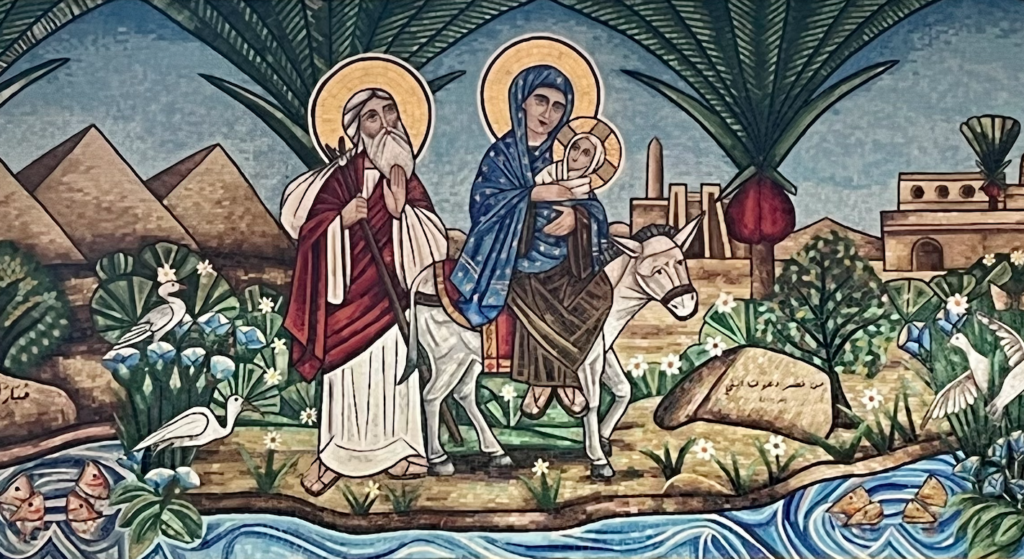
The Apostolic Constitution Exsul Familia Nazarethana (The émigré Holy Family of Nazareth) by Pope Pius XII, 1952
This little remembered document speaks about the historical undertakings of religious communities to provide spiritual care for immigrants. Pius XII provided a summary of his interventions in recent years and also speaks of the benefits of immigration.
“For this reason, on June 1, 1951 in a radio address on the fiftieth anniversary of the Encyclical Rerum Novarum, we did speak of the right of people to migrate, which right is founded in the very nature of land. “If the two parties, those who agree to leave their native land and those who agree to admit the newcomers, remain anxious to eliminate as far as possible all obstacles to the birth and growth of real confidence between the country of emigration and that of immigration, all those affected by such transference of people and places will profit by the transaction”… In this way, the nations which give and those which receive will both contribute to the increased welfare of man and the progress of human culture.” He goes on “the sovereignty of the State, although it must be respected, cannot be exaggerated to the point that access to this land is, for inadequate or unjustified reasons, denied to needy and decent people from other nations, provided of course, that the public wealth, considered very carefully, does not forbid this.”
The Encyclical Pacem in Terris (Peace on Earth) by Saint John XXIII, 1963
In this encyclical, John XXIII explicitly said that “every human being has the right to freedom of movement and of residence within the confines of his own State. When there are just reasons in favor of it, he must be permitted to emigrate to other countries and take up residence there. The fact that he is a citizen of a particular State does not deprive him of membership in the human family, nor of citizenship in that universal society, the common, world-wide fellowship of men.”
The Pope speaks of a right to movement and to immigration, but always when there are just reasons for doing so. This is very similar to the right to Freedom of Movement which is one of the fundamental rights set out in EU law. The Catechism of the Catholic Church is direct: “the political community has a duty to honor the family, to assist it, and to ensure especially… the right to private property, to free enterprise, to obtain work and housing, and the right to emigrate” (2211).
The Catechism recognises that states have a legitimate right and a real responsibility to regulate borders in service of the common good. This isn’t a concession to politics. It’s basic Catholic social thought. Pope Leo XIV put it simply in saying that“I think every country has a right to determine who and how and when people enter.” He went on to say that migrants’ dignity as human beings must be respected.
A nation fails its own obligations when enforcement becomes an end in itself, when procedural violations are treated as more serious than human dignity, when people who came out of genuine necessity have no path to make things right, when families are torn apart without serious justification, or when a permanent underclass of working people is simply left in legal limbo because it’s economically convenient. The question isn’t only whether laws are enforced. It’s how they’re enforced and whether personal dignity is honoured in the process. It’s important that families are kept together not as a favour but as a moral priority. Similarly special attention should be paid to the most vulnerable; children, refugees and people who didn’t choose their circumstances. The human person is not a problem to be managed, and their dignity has to be upheld.
The right to migrate is real, and it flows from the dignity of the human person. The Catechism says that wealthier nations are obliged, to the extent they are able, to welcome those who can’t find safety at home (CCC 2241). Gaudium et Spes(65) grounds this in the universal right to seek the conditions for a dignified life.
The Church asks something genuinely difficult of us: to hold two things at once that our political culture wants to treat as opposites. Human dignity must be protected and social order must be preserved. Ignore either one and you risk injustice. Hold both together and something better becomes possible.
Leo XIV, speaking last year on World Refugee Day, said the “link between migration and hope is clearly evident in many contemporary experiences of migration. Many migrants, refugees and displaced persons are privileged witnesses of hope. Indeed, they demonstrate this daily through their resilience and trust in God, as they face adversity while seeking a future in which they glimpse that integral human development and happiness are possible.”
The Pope went on to say that “migrants and refugees remind the Church of her pilgrim dimension, perpetually journeying towards her final homeland.” Ireland’s history of migration to the UK, North America and in our own day to Australia has ingrained the value of international travel and the possibility of seeking a different life away from this island. Having benefitted to such an extent from the hospitality of others, it is paradoxical and embarrassing that this country is struggling to offer hospitality to people arriving here.
Our response must return us to the Gospel, where Christ identifies himself with the stranger, the hungry, the displaced and the vulnerable. World Refugee Day is not only an occasion for political reflection, but for an examination of consciencewhich asks whether our homes, our parishes, our monasteries and our nation still have room for those who knock at the door in need. The migrant and the refugee remind us that we too are pilgrims, dependent on mercy, journeying towards a homeland not made by human hands. To welcome them with justice and compassion is not simply an act of generosity, but rather a way of recognising Christ himself on the road.
Holy Family of Nazareth, pray for us.
William Fennelly OSB
+ World Refugee Day is celebrated annually on 20th June.