
Categories
Abbey | Latest News abbeynews

Homily – Sunday 20 – Year B

Abbot Columba OSB

When a flash of lightening leaps across a darkened landscape our eyes are opened to hidden features. Sometimes the same thing can happen with a few words of scripture, when they flare brightly and illumine our minds and hearts. In the gospel according to John two words are repeated regularly in order to leave a lasting imprint on our awareness of Jesus: I AM.

Of course we use these words ourselves all the time: ‘I am from Ireland’, ‘I’m tired’, ‘I am on the way to the airport’. But in the gospel according to John the words ‘I am’ are used regularly in a solemn and beautiful manner: I am the Bread of Life, I am the Good Shepherd, I am the Gate, and so on.

Hidden behind these simple words is the mysterious name of God. Remember the call of Moses at the burning bush, when he was sent to bring his people out of slavery in Egypt. He asked the Lord for his name. He was told to say ‘I AM has sent me…’ Now Jesus says, ‘I Am… I AM…’ His awesome identity is being hinted at through the repetition of these mysterious words.

If these is who Jesus really is, then everything he has being saying in the gospel accounts of recent Sundays makes sense: he is the bread which has come down from heaven. He invites us to come to him, to believe in him, to entrust ourselves to him, to listen to him, to learn from him. He wants me to share my life with him so that he can share his life with me.

Today he takes it even further: the bread that I shall give is my flesh for the life of the world. I AM has taken flesh. God is one of us. He becomes one of us in the flesh and in our flesh and blood will die our death. He will give up his life. He shares everything of who he is with us and, in order to bring this home in a very personal and graphic manner, he captures it all under the simple signs of food and drink,
bread and wine. The life that comes from heaven, the life that took flesh among us, the life given up for us on the cross, is given as bodily food and drink.

Sharing in this food is sharing in the life of God himself. But it doesn’t happen by magic. It’s not simply a mechanical result of something we do with our mouths and our digestive systems. The sharing in God’s life implies everything else that Jesus has been speaking about: coming to him, believing in him, entrusting our lives to him, listening to him, learning from him. What we do at his table every Sunday is the culmination of all of this; it is also the fountain of life that makes it all possible.

When we have heard the word of Jesus as food for our lives and digested it, then we are ready to receive a fuller taste of his life in the Eucharist. When he have done this we are empowered to live his eternal life in the here and now, from day to day.

Categories
Abbey | Latest News abbeynews

Homily – Sunday 19 – Year B

Fr Patrick Hederman OSB

This is the Nineteenth Sunday in Ordinary Time, or, for those of us who have been living on this planet for the last three weeks, it is the First Sunday after the Olympics. Whether you have been watching or not, you cannot fail to have noticed that there was something happening in Paris which meant that every Newspaper and TV programme was choc-a-bloc with racing and jumping, complaining, rejoicing, sweating, grunting, grieving and celebrating. It cannot have escaped your notice either that headlines were snatched, not by the
umpteen medals won by China, France, or the USA, or the proportionately large number won by Ireland – no, the major spotlight was on a cameo on that first evening during the opening ceremony [only a couple of seconds, but enough to generate a bonfire of indignation] – they were making a laugh out of the Last Supper: la Cène sur la scène sur la Seine, as the French would have it.

Christianity was being mocked, Christianity is outraged. Apparently the
somewhat large drag artist at the centre of the float, wearing an outsized halo, is getting death threats and hate-mail from horrified Christians and fat-phobic psychopaths, to the extent that she is looking for police protection and is suing her attackers. What was meant to be a flash in the pan during the 6 hour ‘opening’ of the games has turned into the most prominently viewed icon of the entire Olympics – more famous even than the Leonardo Da Vinci original. And what was, and is, that original painting, so famous that it can be recognized everywhere as the outline and the basis for this recent send-up?
The Last Supper Is a mural painting by Leonardo Da Vinci dated
to between 1495–1498, about 500 years ago. It is housed in the Convent of santa Maria delle Grazie in Milan where it covers an end wall of the dining hall. It is one of the Western world's most recognizable paintings and among Leonardo da Vinci's most celebrated works. It represents the scene of the Last Supper of
Jesus with his twelve apostles as this is told in the Gospel of St John, the very same Gospel which was read for us here this morning. The painting depicts the moment after Jesus announces that one of his disciples will betray him.

Leonardo worked on the mural for about three years, but did not work
continuously. A dated document indicates that the painting was nearly
completed in 1497. The prior of the monastery complained to Leonardo about the delay. Leonardo wrote to the head of the community, explaining that he had been struggling to find the perfect image of betrayal, the most villainous face possible for Judas Iscariot. If he could not find a face corresponding with what he had in mind, he would use the prior’s who had complained against him.

Leonardo's masterful use of perspective draws our attention to the face of Christ at the centre of the composition, and Christ's face, through his down-turned gaze, directs our focus along the diagonal of his left arm to his hand and therefore, to the bread on the table. “I am the living bread that came down from heaven. Whoever eats this bread will live forever.” That declaration is all that matters –it is exactly what we are doing here together this morning. Anything
that changes our perspective and fixes our attention on this reality is good news, is Gospel. And never before, since this century began, has our attention been more firmly fixed on this reality.

If Donald Trump has taught us anything it is this: ‘the only bad publicity is no publicity!’ Au contraire: Here is Jesus Christ, here is this morning’s gospel, here is the bread of life: one of the most talked about events at the Summer Olympics of 2024. And we’re talking about a congregation of about 34 million viewers glued to their screens. Our response as Christians should be guided by the second reading this morning: ‘Do not grieve the Holy Spirit of God.  Get rid of all bitterness, rage and anger, brawling and slander, along with every form of malice’ [Ephesians 4:30]. As the Gospel of Saint Mark puts it:
‘Whoever is not against us is with us’ [Mark 9:40]. Amen.

Categories
Abbey | Latest News abbeynews

Homily – Sunday 18 – Year B

Fr Christopher Dillon OSB

“This is working for God: you must believe in the one he has sent.” “That you believe in the one that He has sent”. That is about the most concise summing up possible of the essence of Christianity; and it is a statement ascribed by the gospel writer to Jesus himself, the very one who was sent. And the heart of that summing up is the activity of believing, for activity it is and very hard work. The work is that described in the Second Reading in the words, “Your mind must be renewed by a spiritual revolution, so that you can put on the new self that has been created in God’s way, in the goodness and holiness of
the truth.”

Where are we to begin with all this? We are on holiday; it is the beginning of August. Well, you begin here and now, as you allow these words and their challenge to touch you. “You must give up your old way of life”, whatever that is and whatever that giving up, that revolution, involves. The reality is that many, even most, of us will duck the challenge, for now, anyway. It is too much to take in, too much to take on, on a Sunday morning during the summer holidays. The pity is that God does not do holidays, nor does “the one whom He has sent”.
On the other hand, you may well be thinking, “But I do believe; that is why I am here.” In that case, the challenge is easier to take on; but you still have to make a new beginning. That is how this activity of believing works; it means starting again, every day, re-affirming your belief, your trust, in Jesus as the one sent by the Father to show us the Father, as the ONE whose very being is expressed in His giving of Himself in and to the Son. We see something of what this means in the giving of himself by the Son to the Father in the whole drama of the Cross; this is love which costs everything, love from which we are invited to learn, a love to imitate in our own lives. It is for this purpose that the Son has been sent; it is for this reason that the Father admonishes us to listen to the Son, as the voice from the cloud spoke to Peter, James and John, on the occasion of the Transfiguration which we shall celebrate in two days’ time.

Listening to His voice and receiving the bread from heaven are but two ways of speaking of the same thing. While the voice suggests the word from which we learn, the bread suggests the food, the daily bread, by which we live, the manna which lasts for only a day; the imagery is as basic as it is urgent. But are we hungry enough for it to appeal to us?
Believing in the one whom the Father has sent and listening to His voice are integral to being Christian. This, we are being reminded today, is what our life as Christian human beings is really about. At a practical level, it means being familiar with Holy Scripture, chiefly the Gospels as the obvious place where we will hear Jesus’ voice, which is why the Gospels were written. Gathering this food can be hard work, if we take it seriously. After that, the question is, “Do you want this life? Is it worth it? Will you work for it?” Only you can answer.

Categories
Abbey | Latest News abbeynews

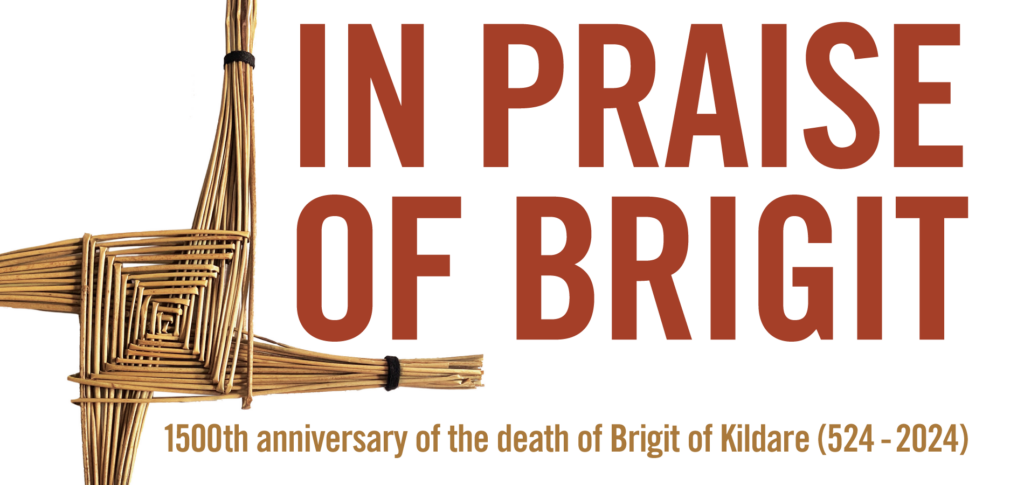
In Praise of Brigit 524-2024

The year 2024 marks the 1500th anniversary of the death of Brigit of Kildare, a figure who fascinates and inspires countless people to the present day.

A one-day conference on Saturday 26th October from 9.45am-5pm at Glenstal Abbey will explore her legacy and that of other Women of God through archaeology, history and folklore. It also celebrates the memory of the great Glenstal Brigit scholar and Celticist, An tAthair Seán Ó Duinn OSB.

Talks include:

  • The Holy Helpers and the Handmaid: Aspects of Devotion to Female Saints in Late Medieval Ireland with Colmán Ó Clabaigh OSB
  • Brigit in Irish Popular Tradition: devotion, narrative, performance and belief with Professor Bairbre Ní Fhloinn
  • Sean Ó Duinn OSB – In Retrospect with Luke Macnamara OSB
  • The Archaeology of Brigit with Dr Tracy Collins
  • St Brigit: forging a patron saint in medieval Ireland with Dr Liz Dawson

For more information and for bookings please contact events@glenstal.com or telephone 061 621005.

Categories
Abbey | Latest News abbeynews

Remembering Kevin Healy OSB (1933-1999)

The monastic community at Glenstal Abbey remembers Father Kevin Healy OSB whose 25thanniversary occurs today.

Daniel Charles Healy was born in Dublin on 30th June 1933. He attended Glenstal Abbey School and began a B.A. course in Univeristy College Dublin which he interrupted in order to enter Glenstal on 27th October 1951, taking the name Kevin. He was professed on 12th March 1953 and, following studies in the Spiritan scholasticate at Kimmage Manor in Dublin, was ordained priest on 31st July 1958.

Back in Glenstal he developed his interest in music and chant, becoming first chanter and engaging in the composition of music for the liturgy in the post-Vatican II period. He also developed his skills as an accomplished calligrapher. Examples of his script can be seen in the monastic annals which he kept from July 1977 to January 1981. Along with the late Father Bede Lynch he was instrumental in developing the school choir which he took over completely when Father Bede was assigned to ministry abroad.

In October 1973 he went to the Abbey of Münsterschwarzach near Würzburg in Franconia where he trained as a sliversmith, qualifying as a journeyman in April 1976. Back in Glenstal he attempted to establish a metalwork shop but economic conditions in Ireland at that period meant that there was little or no demand for silverware. The deep bowl communion-dish that we use at our community Mass is his examination-piece as a journeyman. Father Kevin resumed his work with the school choir as organist, as a liturgical composer and as assistant in the administration of both monastery and school.

In August 1992 he went to Glenstal’s foundation at Ewu-Isan in Nigeria, where he established the tradition of liturgical music. Although he had recovered from a bout of viral malaria, he died on 31st July 1999 while being transported to hospital in Ibadan for further treatment. He is buried at Ewu and there is a memorial stone to him on the wall of our monastic cemetery at Glenstal.

We remember Fathers Francis Henry, Cornelius Doherty and Bede Lebbe whose anniversaries also occur at this time. May they rest in peace and rise in glory. Amen.

Categories
Abbey | Latest News abbeynews

Homily – Sunday 17 – Year B

Fr John O’Callaghan OSB

A main theme of today’s readings is ‘bread’. From time immemorial, from manna in the desert to baguettes in Paris, bread has constituted the staple diet of millions around the globe. It is something known to us all and thus well suited to Jesus’ universal teaching. For Jewish listeners it had the added value of recalling their life in the desert.
Without manna they would have starved to death during those so-called ‘forty years’. It was at Moses’ behest that manna was provided for them after their escape from Egypt. However the manna gave only physical sustenance for a short while, and it had to be picked up every day! It was a solution of very limited kind.

Moses was also the mediator of the covenant made at Sinai between God and his people. But, we know, that covenant was only a first draft for the kind relationships that should prevail between God and the people of God. And thirdly Moses was the one who led the Israelites to the borders of the promised land. But that land was merely a physical territory, including Gaza! It didn’t mean: ‘life eternal’.

Great and all that they were, everything Moses did, to our eyes, was too small! It was only ‘a start’. His most important characteristic was in fact to be someone that could be improved upon! His greatest claim to fame was that he cast a profile which Christ would later fulfil on an incomparably grander scale and with universal scope. And the most important feature of the manna/bread was that it could prefigure the true ‘bread of life which comes down from heaven’.

Yes, today’s gospel the message is on that metaphysical level, deeper than Moses ever conceived of. John’s gospel plumbs the depths of a few isolated events: and today we see see Jesus filling out the profile of Moses, only better, as Messiah. For the Christian listener this gospel also signals something special about bread. There is a manifest allusion to the eucharist. Jesus was soon to declare that ‘He is the bread of life’. In a short while we will take bread, and wine, and under the influence of the Spirit, they will become the body and blood of Christ. The Holy
Spirit transforms the inner being of our gifts and Christ becomes present in our midst. By means of them Christ comes to us intimately and individually but he remains hidden. By means of this ‘bread’ Christ becomes one flesh with us, the members of his community, constituting us as his body the church, making us his presence in the world. Today’s gospel is a great prophetic text, fulfilling the past and promising the future, as regards the messiah and the manna.

And finally, let us not forget, from the first reading, the man who came bringing his first fruits to Elisha, ‘twenty loaves of barley and fresh ears of grain in his sack’. Let’s not forget the small boy in the gospel who had five barley loaves and two fish – just because he is small or has a small gift. It was the basis for great things – there is a lesson for us! The loaves were not multiplied out of thin air. In Jesus’ hands, what we are prepared to share, works miracles and satisfies!

Let us go and do likewise!

Categories
Abbey | Latest News abbeynews

Homily – Sunday 16 – Year B

Fr Jarek Kurek OSB

It struck me on a number of occasions that Irish people have a particular affection for the song The Lord is my Shepherd. It is, no one will deny, sung quite often in churches, especially at funerals. I wondered why this is so? Is it due to the fact that back in the 70’s four hymns were introduced to be sung at Masses, and this one simply came to the fore? Or one may explain this phenomenon as a consequence of the pastoral imagery the hymn evokes, no doubt close to the heart of any Irishman. The landscapes around, full of pastures and sheep come straight to mind. If we follow this sentimental path, it will be easy to form an image of Jesus as a Good Shepherd.

Now, visualising it, Jesus carries a sheep on his shoulders. He clearly looks after it. But of course that’s not all. As a good shepherd he will also feed it. And here we get to the nub of the problem. On the one hand there is this beautiful sentiment towards the image of our Lord as a shepherd. But on the other hand, yes, a serious question arises. Can we say that people in this country felt properly fed by the Church and her shepherds in the past? And when I say ‘fed’ I dare to ask, were the people really formed by the teaching they were supposed to receive?

Asking these rather challenging questions, I want to tell you about an intriguing document I came across recently. It was a letter written by some insightful priest on the occasion of his visit to Ireland in 1984. The priest was from Poland, of course. He is naturally impressed as he visits the most catholic country in the world. And yet he is struck by a number of things. Although the churches were still packed at the time, he detected a looming crisis for the institution.

What made him think that the end of the Church’s prosperity in Ireland was close?

The fact that only 11% of people said their attitudes were informed by the Church’s teaching. It wasn’t just his observation based on some conversations, no, he referred to a poll made at the time, that showed the overwhelming majority, 61%, took as their point of reference from their family and 23% from the media.

Interesting, isn’t it? Interesting, thought-provoking and challenging.

Today, is a good time, I think, for all of us to reflect upon this, so that we can draw what we need from our pastors and lack nothing. It is the role of the pastor, the Good Shepherd, to care for the flock, so that we do not feel abandoned, like sheep without a shepherd.

By the same token, whoever you are, wherever you live, you may perhaps be happy to consider a new way of how to be fed. It may be the case, that it will require some effort on your part find a good shepherd, someone who will guide you, someone who will nourish your soul, direct you and provide you with food for thought.

Having found a teacher to lead you to Jesus, the ultimate Good Shepherd, you can then truly sing The Lord is my Shepherd, there is nothing I shall want. He makes me lie down in green pastures; he leads me beside still waters; he restores my soul. […] Even though I walk through the darkest valley, I fear no evil; for you are with me; your rod and your staff – they comfort me. You prepare a table for me […] and I shall dwell in the house of the Lord my whole life long. Amen.


Categories
Abbey | Latest News abbeynews School | Latest News

Father Columba McCann elected Abbot of Glenstal

Columba McCann OSB has been elected the seventh Abbot of Glenstal Abbey.

Abbot Columba begins immediately his eight-year term of office as leader of the monastic community of twenty six Benedictine monks in Murroe, County Limerick.

Raised in Dublin and educated by the Jesuits at Gonzaga College, he studied music at University College Dublin and trained for the priesthood at Holy Cross College in Clonliffe before he was ordained for the Archdiocese of Dublin in 1988.

Following further studies in Rome, he lectured in liturgy at the Dublin diocesan seminary and a number of third-level institutions in the city whilst serving as master of ceremonies to the Archbishop of Dublin.

Father Columba entered the novitiate at Glenstal Abbey in 2004 and has held a number of roles including organist, novice master and oblate director as well as serving as a chaplain, choir director and religion teacher in the Abbey School.

In addition to composing a number of hymns and musical pieces for the organ, he has published two books with Veritas Publications: 101 Liturgical Suggestions: Practical Ideas for Those Who Prepare the Liturgy (2014) and Becoming Human, Becoming Divine: The Christian Life According to Blessed Columba Marmion (2024).

The date of Abbot Columba’s Abbatial Blessing by the Archbishop of Cashel and Emly will be announced in due course.

Categories
Abbey | Latest News abbeynews

Homily – Sunday 15 – Year B

Fr Lino Moreira OSB

According to the gospel of Mark, when Jesus started his public ministry he went round Galilee saying: ‘The time is fulfilled, and the kingdom of God is at hand; repent and believe in the gospel’ (Mk 1:15). These words are not a quotation but a summary: they sum up the whole of Jesus’ preaching. So when we subsequently hear about the twelve disciples that they went out and proclaimed that all should repent (cf. Mk 6:12), we cannot but conclude that their message was exactly the same as their master’s. There may have been some kind of personal input on the their part, but the evangelist makes no mention of this, because he wants to emphasise in the clearest way possible that what the apostles said was a perfect echo of what Jesus had to say – so much so that their preaching was confirmed by the same sort of miracles that Jesus himself performed (cf. Mk 6:12).

The ministry of the twelve passed on to their successors, the bishops, who are assisted by the priests and deacons. Year after year, Jesus continues to send out these messengers, telling them to take nothing for their journey except the things that a shepherd normally needs: a staff, a tunic and a pair of sandals. These instructions are not to be taken too literally, but they are a stark reminder that the ministers of the Church should practice the same kind of detachment as Jesus did.
They should trust that having been made participants of Christ’s lordship over all creation, God will touch the hearts of men and women of good will to provide for their material needs.

Now as in the past, the mission of every shepherd acting on behalf of Christ is to preach repentance, and use his authority over unclean spirits to cast out demons and cure the sick (cf. Mk 6:7.12). This kind of language is not very popular in our time. All too often, the word repentance conjures up the image of a soul tormented by guilt, who has lost the ability to enjoy life, and is always casting a wet blanket of
negativity on anyone who happens to be around. On the other hand, any talk about spirits and demons smacks of a very primitive worldview in an age of widespread confidence in science as the only valid form of knowledge.

All of this, however, is based on a series of misconceptions, which need to be carefully examined. First, it should be noted that the word ‘repent’ – a command which sums up Jesus’ message – is simply the English rendering of the Greek ‘metanoeíte’ (Mk 1:15), a term which has a wide range of meaning and is utterly devoid of negative connotations. To put it more clearly, the gospel of Jesus proclaimed by the apostles and their successors invites us to turn around, and start
trying to attune our patterns of thought and behaviour to the kind of merciful love that God himself has showed by blessing us in Christ with every spiritual blessing (cf. Ep 1:3). This is the only way we can hope to unleash, both within ourselves and in others, some of those positive energies that are needed to transform a world of selfish competitiveness into a home for all creation.

As for demons and unclean spirits, whether we believe in them or not, the fact remains that it does not lie entirely within our power to make ourselves whole again. The accumulated knowledge of finite beings will always be limited, and therefore largely ineffective. We do need the saving word of Christ, and the power of his sacraments, to be healed of all our infirmities and ultimately receive the gift of eternal life.

Categories
Abbey | Latest News abbeynews

Changes to Opening Hours/Liturgy Times

The monastic community at Glenstal Abbey will hold an election for the position of Abbot and undertake its annual retreat between Monday 15th – Sunday 27th July 2024. During this time we ask your prayers for us, and wish to draw your attention to some changes to opening hours/liturgy times as follows:

Monastery Reception and Shop: open daily between 10am-4pm, except on Sunday 21st and 28th July when it is open immediately after Sunday Mass only.

Monastery Guesthouse: closes on Saturday 13th and reopens on Monday 29th July.

Liturgy Times: TBA

Subscribe To Our Newsletter To Receive Updates

[hubspot type=form portal=6886884 id=9e1d6d0d-c51e-4e35-929d-3a916798de64]