
Categories
Abbey | Latest News abbeynews

FUNERAL ARRANGMENTS, FR. BRIAN MURPHY OSB

Funeral arrangements

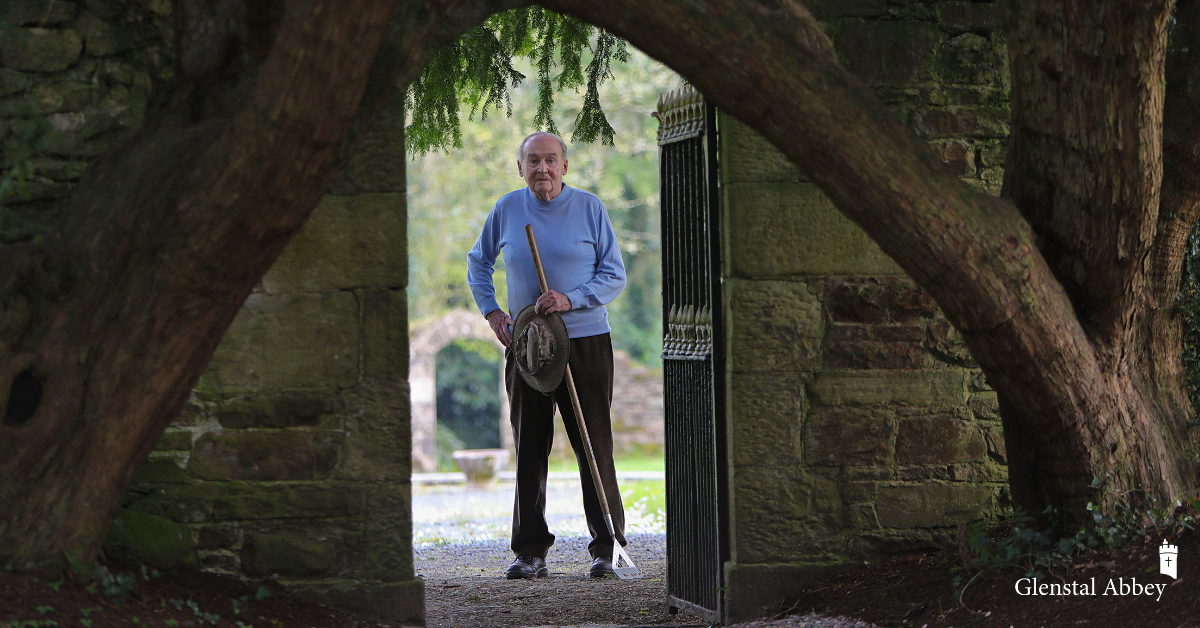
Fr. Brian Murphy OSB died on May 16th 2022, at University Hospital, Limerick; sadly missed by his children Miranda and Frances; his monastic brethren at Glenstal Abbey; his brother Peter; grandchildren Paul and Amelia; and a wide circle of relatives and friends.

Reposing in the Monastery from 3.30 pm until 5.00 pm on Friday 20th May, followed by removal to the Abbey Church for the office of the dead. Funeral Mass on Saturday 21st May at 11.30 am,  burial will follow in the Abbey Cemetery.

All services will be available online via the webcam.

Obituary

John Patrick Murphy – known in his family as Paddy – was born in England to Irish parents, on 28 September 1935. Following his secondary education, he entered Douai Abbey, near Reading in Berkshire. He was professed in October 1955, taking the name Brian, in honour of the seventh-century Bishop of Dorchester, Saint Birinus. He was ordained priest in October 1963.

In 1974, Fr Brian discerned that he should leave Douai. He spent an extended period in Glenstal shortly after that, but eventually decided to return to lay life. He qualified as a teacher in Trinity College Dublin, and taught for several years at St Gerard’s School in Bray, Co. Wicklow, eventually becoming Head of the Junior School. His book, St Gerard’s School: An Educational Initiative, was published in 1999.

Brian arrived in Glenstal once again in September 1984, this time for good. Initially a guest, he spent his time on historical research and teaching. He was awarded a PhD in History from UCD in 1987. Sensing a call to return to monastic life, he was permitted to begin a period of probation that same year, and his definitive incorporation into the Glenstal community became effective on 1 August 1990. Throughout the decades that followed, Fr Brian had two primary occupations – scholarly historical work and the restoration and care of Glenstal’s historic gardens. He was passionately committed to both, and brought them together most elegantly in 2014, with the publication of Glenstal Abbey Gardens.

His 1990 book, Patrick Pearse and the Lost Republican Ideal, offered a notable and somewhat controversial challenge to prevailing ‘revisionist’ interpretations of the history of the revolutionary and civil war period in Ireland, and he continued writing and lecturing on related topics to the end. Less controversial was his 2018 book on the traumatic experiences during this time of the family who built Glenstal castle, The Life and Tragic Death of Winnie Barrington.

Devoted to daily work in the terraced garden and the Lady Garden, Fr Brian was a familiar and welcoming face for countless visitors over the years. He had a loyal band of assistants throughout this time, including many ‘men of the roads’, who had come to stay in our hostel.

Fr Brian became ill on the afternoon of Sunday 15th May and was transferred to University Hospital Limerick on Monday 16th May, where he died later that day. He is survived by his brother Peter, daughters Miranda and Frances, and grandchildren, Amelia and Paul.

Eternal rest grant unto him, O Lord, and let perpetual light shine upon him.

PDF: Brian Murphy OSB + RIP


Categories
Abbey | Latest News abbeynews

HOMILY – 5TH SUNDAY OF EASTER – YEAR C

Fr. Cuthbert Brennan OSB

We are now five Sundays after Easter, that day when we gathered to proclaim the truth that the crucified Jesus broke the bonds of death and came forth from the tomb. The future was cracked open and we glimpsed a shadow of our future selves. But five Sundays from Easter is a long time. We get back from the tomb and we wonder what if anything has really changed. The Easter sun has gone down and when we awake we discover that it’s the same old world, the same old you, the same old me. We return to our old ways and identities and put back up the boundaries which secure those identities. These boundaries which provide us with such comfort that we don’t even see how confined we are behind them, how limiting they can be for our life and vision.

Contemporary leadership and management theories emphasize with unrelenting zeal how important it is to have a vision, a vision statement, an imagined direction for individual leaders and companies if they are going to be successful. Such a vision is not understood to be some kind of dreaming completely unmoored from reality; rather envisioning a successful path requires that a leader is deeply cognisant of their context.

Beyond its contributions to business ventures, there is a long tradition for employing our imagination, the power to envision, even holy daydreaming as a way to come closer to God. And in the vision from John in our reading from Revelation this morning the church offers us, the baptised, it’s best vision of our identity.

In this vision people do not go up to heaven, heaven comes down to them. The same God who created heaven and earth the first time is pleased to create them both anew. And God comes too – joining humans right where they are “See the home of God is among mortals. He will dwell with them as their God, they will be his people and God himself will be with them. With a future like that we can’t dismiss the earth.

In this vision, the destination is not a garden but a city. We are not headed back to a perfect paradise for two but forward to a city for all nations. The vision of a new Jerusalem is bound to be a disappointment to people who thought they were going to have God all to themselves since this city is going to be full of people from every corner of the earth. Anyone who cannot get along with their neighbours now is going to be miserable then, unless they let the vison get to work on them ahead of time, softening their hearts and opening their minds to embrace all whom God embraces.

To choose this destination is not about securing an advance ticket to heaven but it is saying yes to being grounded in the very vision of Jesus Christ. And saying yes to it will not give you a risk free, cost free, pain free life. The challenge of embracing this vision leads us to appreciate the other and particularly the poor. People on the margins can best reveal how our societies are structured to grant privilege to some at the expense of others.

To say yes to Christ may in fact make things harder rather than easier for you, with one important exception – you will never suffer from a shortage of higher purpose in your life. You will never wonder why you are here or where you are headed. Your feet are pointed in a certain direction – toward full communion with God and neighbour.

And in choosing this destination you gain a whole new family, a family of the baptised created by Christ, where water is thicker than blood. And the greater part of the family has already gone before us – the Saints who are dedicated to helping us get to where we are meant to go, so our lives unfurl towards their purpose.

The gospel passage today succinctly summarises the whole

of the Jesus vision

of the very daydreaming of God

of the most sacred hope of the divine imagination;

That we might love one another and so reveal us as true disciples.

In a favorite rabbinic story, a rabbi asked his students how they could tell when the night had ended and the day was begun.  “Could it be,” asked one “when you can see an animal in the distance and can tell whether it is a sheep or a dog?”  “No,” said the rabbi.  “Is it,” asked another, “When you can look at a distant tree and tell whether it is an olive or a fig?”  “No,” said the rabbi.  “Is it,” asked a third, “when you can gaze into a cup and tell whether the liquid is water or wine?”  “No,” said the rabbi.”  Then tell us, they demanded, “Tell us when you know that the night has ended and the day is on its way.”  “It is,” said the rabbi, “when you can look into the face of any woman or man and see that they are your sister or brother, because if you cannot do this then it is still night no matter what the time.

Living a life of faith requires an imagination

a vision of what could be in God:

the possibility of treating all people with equal dignity

the possibility of acts of service and sacrifice

the possibility of peace rather than war

the possibility of John’s vision of a new heaven and a new earth.

May this Eucharist fortify us with these mystical gifts

that we might see and enact

this revolutionary vision of Christ,

whom we call Lord and God, forever


Categories
Abbey | Latest News abbeynews

HOMILY – 4TH SUNDAY OF EASTER – YEAR C

Fr. Luke Macnamara OSB

Saint Benedict opens his Rule with the words “Listen O my child to the ear of the master, and incline the ear of your heart.” This is a different quality of listening than we are used to. It is not the simple decoding of the sound waves that cause our ear drums to vibrate. This special listening involves a deeper organ, the ear of the heart, a listening in the very core of our being.

Why does Benedict insist on this special quality of listening? There is a great risk that most of life passes us by? Sadly, we too often miss out even what is most important. I remember observing a couple at a train station. The woman boarded the train, the man remained on the platform. The woman kept looking out at the platform. When the train pulled out and she gave her final wave, she closed her eyes to keep the memory of her partner safe, to hold it close. I do not know the woman, but I suspect that she never really left her partner. While physically apart, her love for him was very much alive.

Saint Benedict insists on this deeper listening because the stakes are high. Jesus wishes to give us nothing less than eternal life. It is hard to imagine what eternal life looks like. It will be something akin to the change at birth when we left the womb to enter the world. We were quite satisfied in our little dark sack. We had everything supplied by a tube and were in a warm bath with no intruding light. Entering into the world, our bodies took on a whole new range of activities. Our mouths which had no real function before are now used for breathing, nourishment, speaking, smiling, and kissing. Our previous life which had appeared full, now appears so limited. In like manner, when we die and our transformed bodies rise to eternal life, there will a quantum leap, whereby we will see Jesus and the Father and be under the shelter of God’s tent. This is what is pictured symbolically in the book of revelation. Gathered before the throne of God and the lamb (namely Jesus), dressed in the white robes of our baptism, we are sheltered in the tent of God and will never hunger or thirst or be afraid. The lamb will be our shepherd.

How might we prepare for eternal life? Benedict advises tuning into the important moments of life every day and asks his monks to begin each day by singing this psalm verse “O that today you would listen to his voice”. This awareness involves not only the five senses but the deepest inner sensory organ, the heart. This is the organ I was privileged to witness in action in the young woman on the train. After her eyes opened she was somehow transfigured. The stress of the journey and the separation was gone. Physical absence was transformed into spiritual presence.

At this Mass we have heard Jesus offer us eternal life and now will shortly receive his nourishment at this altar for the journey. May we not limit our horizons to the physical world and ready ourselves for the great future that God has in store for each us – eternal life. Some of you will be called to fulfil that vocation in marriage, others perhaps as monks, nuns, or missionaries. Be open to the Lord’s call as he is the one who truly wants the best for you.


Categories
Abbey | Latest News abbeynews

HOMILY – 3RD SUNDAY OF EASTER – YEAR C

-Fr. Henry O’Shea OSB

In the early Church when the catechumenate was still a living reality, the weeks after Easter were used as a period of further instruction for those who had been baptized, confirmed and had received Communion for the first time at the Easter Vigil.

Baptism was regarded – and was often referred to – as the great illumination of mind and soul.   Along with the sealing with the Spirit in the chrismatization or confirmation and the reception of the Eucharist for the first time, it prepared the candidate for the further period of so-called mystagogy, or instruction in the mysteries into which she or he had been initiated.   The initiated soul was now considered capable of grasping the full implications of her or his initiation.

It is, I think, not untrue to say that we are now living in an environment in which any sense of baptismal initiation has largely evaporated. Baptism is for many a social rite of passage or, worse, an insurance against the time when a child needs to get a place in a local school.  Along with this evaporation comes an attenuated understanding of the Christian mysteries – a limited and limiting grasp of what faith in Jesus means and demands.

The liturgical texts that we pray and scripture readings to which we listen  celebrate and in meditate on the implications of initiation to the mysteries. This happens in every liturgical gathering of the faithful, but very markedly in the weeks after Easter and leading up to Pentecost.

All three of to-day’s readings are taken from the New Testament.   In the readings from the Acts of the Apostles, from the book of Revelation – also called the Apocalypse – and from the Gospel of John, the community of the new covenant indulges, as it were, in celebratory introspection on, or joyful examination of, its own beginnings.   As in all liturgy, the community reflects on how things were, on how they were intended to be and on both of these with a view to how they might, ought and still can be.

As in all liturgy, each of these readings has to a greater or less extent, three dimensions or aspects. The first aspect is historical, that is, it deals with where we came from, how and why. The second aspect is rather grandly called eschatological (which is a word derived from the Greek eschatos/ last or final) that is, where we are going and how and why we are going. The third aspect is existential, that is what we can do and be now, how and why we can do and be now in our present time.

The reading from the Acts of the Apostles depicts a community living with the dawning implications of faith in the resurrection. But this is a community still feeling its way. Peter and the apostles are still coming to terms with what they had experienced. The consequences of this coming-to-terms are immediately recognised by the Jewish religious establishment as dangerous, as a threat to the regime. And the Roman occupying forces are always there in the background.

The book of the Apocalypse or the Book of Revelation is a book of which we tend to be nervous.  Its language is too redolent of mystery, mystery in the non-liturgical meaning of the word, that is, something not understood, even a fairly-tale.   That is partly the point, partly the intention, of the book.   This book tries to describe a reality beyond words, a reality before and beyond and after time. So language is strained. The limits of language are stretched.  The Book of Revelation tries to put into words who and what Jesus Christ is and was and who and what those who believe in him are and can become.   It tries to put this hope, this life, into words.

From this attempt comes the time-out-of-time image of the throngs of thousands of angels, animals and elders around the Throne of God. From this desire to go beyond language, is the shout, the proclamation, of the reality of who the Lamb, the risen Jesus, is: ‘the one who was sacrificed and worthy to be given power, riches, wisdom, strength, honour, glory and blessing.’

Crucially, this gathering around the Throne of God and this proclamation are not confined to the heavenly throngs. All of creation is included in this cosmic vision; past, present and future – including ourselves and especially the throngs of the baptised. Along with the four animals, representing the four Evangelists we see on the panel at the front of our altar; along with the elders in the reading, we are called to prostrate ourselves, to worship and to proclaim.

In all preaching, there is a danger of succumbing to the lure of words, of being seduced by word-play or by bad poetry. Today’s gospel puts us right.

Saint John tells us that Jesus really rose from the dead. Ghosts do not eat bread and fish. Ghosts do not eat at all. Such is the bewilderment of the disciples that they still cannot quite grasp that they are dealing with the risen Lord. They want to believe –  but cannot quite make the leap. They remind us of ourselves.

John tells us that the disciple whom Jesus loved – most likely John himself – says to Peter, ‘It is the Lord.’

Then, everything falls into place. The large catch of fish after an unsuccessful night – but now 153 caught in obedience to Jesus’ instructions to try again. The seemingly senseless number of 153 is used to show the concreteness, the reality of the catch; the breakfast of bread and fish showing that the Jesus eating with them is truly risen.

But, Jesus does not stop, is not satisfied with spectacle. Jesus is not about show or conjuring tricks. He pushes on to ask Peter – the very one who so recently denied him – ‘Simon, son of John, do you love me?’ Jesus is asking Peter, as he asks us, ‘Have you moved on from knowing about me, to knowing me?’ ‘Have you moved, are you moving on, from knowing to loving. Have you moved, are you moving to knowing by loving, so that you can know and love yourself, so that you can become your real self and in so doing, catch followers for me and feed and serve them as I have fed and served you?’

We can believe in, even occasionally catch a glimpse of, the Throne of the Lamb. We can confess, proclaim and worship the Lamb. That Lamb, Jesus, the risen Lord, wants this and makes it possible, but also wants and makes it possible for us to live out this confession, this proclamation, this worship in the concrete here and now.

‘Simon, son of John, do you love me?’

Categories
Abbey | Latest News abbeynews

HOMILY – 2ND SUNDAY OF EASTER – YEAR C

Fr. Senan Furlong O.S.B.

On the occasion of the first Mass of Fr Jarosław Kurek O.S.B.

Throughout the long sweep of Christian history, today, the Sunday that concludes the great Octave of Easter, has been known by many names.  It is Low Sunday: ‘low’ perhaps being in contrast to the ‘high’ feast of Easter Day, but more likely coming from Laudes, the first word of a sequence sung on this day, Laudes Salvatori: Let us sing praises to the Saviour.  It is also White Sunday, Dominica in albis, because on this day those who had been baptised during the Easter Vigil put aside their white baptismal robes which they had worn for the entire Octave.  In the Middle Ages it was known as Quasimodo Sunday on account of the opening words of the entrance chant that we sang earlier: Like new-born babes, long for the pure spiritual milk.  Finally, and more recently it has become known as Divine Mercy Sunday, because today marks the conclusion of the Divine Mercy Novena, a devotion originating in Our Lord’s revelations to St. Faustina. Today, Jarek, as we conclude this eight day celebration of Easter — a day whose different names inspire praise, joy for the gift of baptism, new birth, trust in God’s merciful love  —  you offer your first Mass.  You celebrate it in the midst of the assembly of the faithful, with your family, your confreres and your friends, here in this Abbey church of Ss Joseph and Columba at Glenstal where God in his divine mercy has willed that you pitch your tent.

As a priest, Jarek, it is your privilege — for privilege indeed it is — to preside at the celebration of the Eucharist, to lead the people of God in this timeless celebration of the mysteries of Christ.  It is your privilege to preside over the Liturgy of the Word: God’s revelation to his people.  It is your privilege, in the name of the Church, to stand at the altar of God as earth unites with heaven in this great act of thanksgiving and praise.

To understand what all this means we need only think of the scene portrayed in today’s gospel. The disciples are gathered in the upper room, behind closed doors, on the day of resurrection. The Risen Lord, still bearing his wounds, comes and stands among them. He speaks a word of peace, shalom, a word of tender mercy that banishes fear. The disciples see, they can even touch the risen Lord. The same risen Lord comes and stands in the midst of his Church, age to age, even to this day whenever two or three are gathered in his name. Here, now, he stands among us, despite the closed doors of our fears and doubts.  And what we celebrate is the very icon of heaven.  It reveals the face of God to us.

To lead God’s people in prayer, Jarek, you must adopt the attitude of Christ himself: the one who serves, who humbles himself, who bends down and washes the disciples’ feet; something, which as a monk, you also learn from the daily worship of God in choir and from your life in community. As a monk-priest you are called to serve your brethren and all those who draw life from this place, bearing their griefs, carrying their sorrows, sharing their joys. The more you do this, the more perfectly you will be conformed to Christ himself who came to serve, not to be served.

St Benedict, as you know, is somewhat ambivalent about the presence of priests in a monastic community, though not near as harsh as he is about the prior.  Benedict’s reservations spring from the fact that priests sometimes get notions about themselves. But it is also clear that Benedict has a tremendous respect for the priesthood. For like all the sacraments, the priesthood is one of God’s great gifts to his people, a treasure contained in frail earthenware vessels.  Echoing St Cyprian’s admonition to the confessors of his day who in time of persecution showed great courage but in time of peace were proving difficult, Benedict urges the ‘frail vessel’, the monk chosen to exercise the priesthood, to “make more and more progress toward God”. His words resonate with those spoken by the archbishop when he presented you, Jarek, with the bread and wine brought to the altar by Witek and Mirka: “Accept from the holy people of God the gifts to be offered to him.  Know what you are doing, and imitate the mystery you celebrate: model your life on the mystery of the Lord’s cross.”

When the Risen Lord appeared to the disciples in the closed room he breathed on them the breath of God, the Spiritus Sanctus, the Holy Spirit that enlivens the whole world. Jesus has breathed into each of us the Holy Spirit that we might become to the world we live in a bearer of mercy.  That is the vocation of all the baptised. That is the heart of being a priest.  To paraphrase the core of St Faustina’s message and mission: Breathe into your world what the risen Christ has breathed into you, which is divine mercy. May this message and mission resound and reside in your heart, Jarek, and may you become like Christ, your master, a living spring of mercy, flowing out into an arid world, a world hungering and thirsting for God.  Ad multos annos.


Categories
Abbey | Latest News abbeynews

HOMILY EASTER SUNDAY 2022

Fr. Christopher Dillon OSB

Against the backdrop of the war in Eastern Europe, it seems almost obscene to shout, “Alleluia”, as Christians of the Western tradition are doing today. But the fact that we are doing so is itself an indication of the overwhelming importance of the day. After the solemn liturgical celebration of these past three days, during which we have marked, scene by scene, the drama of our being bought back from destruction at the price of God’s blood, if we can say that of the blood of Jesus Christ, we cannot withhold our rejoicing at the achievement of Jesus’ resurrection. We are celebrating nothing less than the defeat of death. From the moment of Jesus’ “return to the Father”, by means of his death, the phenomenon of death for all humankind has been changed irrevocably. Thenceforth, death is no more than the point of graduation from this temporal human manner of being to the fulness of life in God, however that is to be understood. This is the heart of the Good News of Christianity, the goal of the Incarnation of God in Jesus of Nazareth.

In our world of alternative facts, fake news and disinformation, you may well ask what it means to make this assertion of the resurrection of Jesus from death. It is a critical question and one that needs both to be asked and to be answered. Is the testimony of the self-styled “eye-witnesses” which we heard in the first reading sufficiently compelling? “We have eaten and drunk with him after his resurrection from the dead – and he has ordered us to proclaim this.” But what does “resurrection” mean? Read for yourselves the various accounts of the resurrected appearances of Jesus, in the different Gospels. Jesus’ rising was clearly not a raising from the death, as Lazarus had been raised, only to die again, at some later date. This was/is a physical rising from death, which allowed for eating and drinking; but also for appearing and disappearing, for a manner of being which exceeds our normal experience and description.

This testimony, we are told, was supported by the working of miracles and manifest heroism of those witnesses in martyrdom, later on. All of us here have been brought up to believe this testimony and to live accordingly, in the community of believers which we call the church. But, do we believe it? And if we do, how does our believing affect the way we live our lives, if at all?

These are questions which deserve responsible enquiry by every one of us. Indeed, the credibility and the future of the church in the West depends on the quality of our engagement with them.

The synodal process on which we are struggling to embark offers an obvious opportunity to address them and the many other matters which follow from them. We need to inform ourselves of the real issues in the community of believers, men and women – more women than men, don’t forget – and to hold our leaders in the church to account both in what they teach and in how they live.

All this makes us an Easter people, involving engagement and hard work, but always in the certain knowledge that the Spirit of God which Jesus breathed into the world is with and within us. We have good news to share and good news to live by: Christ is risen, Alleluia!


Categories
Abbey | Latest News abbeynews

HOMILY EASTER VIGIL 2022

– Fr. Abbot Brendan Coffey OSB

We have just heard the beginning of the resurrection story; a narrative which is both shocking and amazing. One of the things that makes these accounts so believable is that sense of unexpectedness. The disciples arrive at the empty tomb never having really believed that Jesus would return from death, and now they find themselves in a disturbing new world where anything is possible; and so bright is the light of this new Easter morning that even the familiar face of Jesus is unrecognizable. And so, ‘My hosanna is born of a furnace of doubt.’

The women at the tomb, the apostles, the disciples on the road to Emmaus, all experienced something terribly traumatic. Thomas was not the only one who doubted. The resurrection accounts are full of people getting it wrong. In fact this is one of the few details that all the gospels actually agree on. Mary thinks Jesus’ body was stolen. Peter sees the linen wrappings and has no idea what they mean. The disciples failed to understand the scriptures or what was really going on. Even after the angels message to the women they were still confused and unconvincing and so the apostles thought their story pure nonsense. You could hardly get more misunderstandings into a couple of pages if you tried. The simple fact is that our minds and our imaginations are far too small to contain the vastness of the mystery of the resurrection. This is why we still descend into jealousy, war, vengeance and so on.

Did you ever wonder what it was like for those first few hours after the empty tomb had been found and Mary of Magdala, the apostle to the apostles, delivered her message? There must have been great uncertainty, half hope and much terror; which of us would really rejoice at the prospect of a miracle that would make us rethink most of what we had taken for granted? Then into that chaos steps a figure before whose face ‘the questions fade away’. Tonight Raffi, you will be baptised into this mystery, sealed with the gift of the Holy Spirit and feast on the bread of angels. You are about to meet the Risen Lord, before whose face ‘the questions fade away’. The world is even more dangerous and strange than before, the future is now quite unimaginable; but there is nothing that can alter the sheer effect of his presence.

How can I experience the presence of the Risen One in a world so full of atrocity and injustice? Yet people in the most extraordinary situations have witnessed to this presence. We might well remember some of them tonight – the people caught up in the war in Ukraine, Christians facing threats and attacks for their faith in different parts of the world; please pray for and think of them. Sometimes people in such situations feel his presence in the middle of what they endure. They feel an overwhelming sense of being where they should be, being rooted in the moment in a way that doesn’t at all blur your honesty about what’s there in front of your eyes but gives you what you need to sit in the presence of horror and grief and live – and so once again, hosanna is born of a furnace of doubt.

On Easter morning, it is as if ‘the fountains of the great deep’ are broken open, and we are allowed to see through this darkness, like Peter and John at the empty tomb, and glimpse for a moment the light of Easter. So now we open the fountain of life, the womb of the Church, and admit Raffi into this great mystery.

Χριστὸς ἀνέστη! Ἀληθῶς ἀνέστη! (Khristós Anésti! Alithós Anésti!) Christ is Risen! He is Risen Indeed!


Categories
Abbey | Latest News abbeynews

Easter Message From Fr. Abbot Brendan Coffey OSB

The Lord has truly Risen, Alleluia!

After an absence of two years we were able to welcome guests and visitors back to Glenstal for the celebration of the Easter Triduum. These intense days, when we celebrate the Passion, Death and Resurrection of the Saviour, are the most important days of the year.

We remember all those who celebrated Easter with us down the years and are no longer with us. We particularly remember those who went to their eternal reward during the Covid pandemic and pray for their grieving families. We give thanks that we are now able to celebrate these great mysteries together once more and for all the solidarity and kindness we received over the last two years, particularly from our health care professionals.

We also pray in a very special way this year for our brothers and sisters in Ukraine. We pray for an end to this terrible war. We pray for peace, for justice, for compassion and humanity. We pray that the victory of Christ over sin and death will give strength and courage to all who are suffering, who have lost loved ones, who have been driven from their homes and separated from their families. We pray that the presence of the Risen Lord will soften the hearts of those who make war and that this great offence against God will swiftly come to an end.

May the peace and joy of our Risen Saviour be with all of you and those you love. Χριστὸς ἀνέστη! Ἀληθῶς ἀνέστη! Christ is Risen! He is Risen Indeed!


Brendan Coffey OSB

Abbot of Glenstal

Categories
Abbey | Latest News abbeynews

Holy Thursday 2022

Fr. Abbot Brendan Coffey OSB

“The hour has come,” Jesus rises from the table, removes his outer garment, fills a basin with water and begins to wash the feet of his disciples. This is lost on us, until we realise that it was a great courtesy in the ancient world for a slave to meet people at the door and wash their feet. After this washing the lord of the house would come out and put perfume on their hair to make them feel truly welcome. It was a lovely gesture.

The only trouble here is that when Jesus knelt down to wash the disciples’ feet everyone in the room became very quiet, because they felt ashamed. Their Lord and master is doing this and they know that he’s not acting, because Jesus only dealt in truth. And there he was, kneeling before them, washing their feet.

And so Peter says, “You’re not going to wash my feet.” “If I cannot wash your feet, you can have nothing to do with me” said Jesus. Why would Jesus say something like that? He was saying, “If you do not let me wash your feet, you will never understand who I am, you will never understand why I came, you will never understand your own destiny.”

Jesus teaches us, you either love or you do not love, and, if you love, you wash feet. We either live in the history of this world or we’re not really living at all. If we think that we can measure everything, that we can control everything, that we can do all things without an aura of mystery in our lives, we’re deluded. The world is a messy place, where lots of jarring notes are found, war, famine, injustice; the great mystery, life, confounds us. Washing feet helps makes sense of it all. How can we ever hope to make sense of something as awful as the war in Ukraine without it? How are we to react to something like this as Christians, without this example from Jesus at the Last Supper? Only in the realm of mystery is it possible to find answers and adequate responses to so many of life’s most difficult challenges.

An itinerant preacher who has nothing to give, understands and teaches us that we have nothing to give. Our money is not important. Speaking fine words is not important. Social standing, or power, are not important. The only important thing is that we are learning how to love. This is the beginning of the mystery of Holy Week. For it is love that is the secret of wisdom. And the one who loves, understands truth. And the one who loves, understands the meaning of things. Without this fundamental example from our Lord and Master we would have no response to give to the most pressing problems of life. “I have given you an example”, we need to pay attention.

Categories
Abbey | Latest News abbeynews

HOMILY – 5TH SUNDAY OF LENT – YEAR C

Fr. Denis Hooper OSB

IF YOU GOOGLE APRIL 3RD YOU WILL DISCOVER THAT IT IS “WORLD PARTY DAY” – WHATEVER THAT MEANS.

TODAY IS THE FIFTH SUNDAY OF LENT. TO MARK THE SEASON OF LENT IN THE SCHOOL WE HAVE HAD ONE PENETENTIAL SERVICE ON FRIDAY AND TWO MORE ARE PLANNED FOR NEXT WEEK. THIS IS A UNIQUE OPPORTUNITY FOR THE STUDENTS HERE IN GLENTSTAL ABBEY SCHOOL.

THROUGHOUT THE NEW TESTAMENT PEOPLE COME TO JESUS TO BE HEALED AND TO HEAR WHAT HE HAS TO SAY.

IN TODAY’S GOSPEL THE LADY CAUGHT IN ADULTERY NEITHER WANTS TO HEAR WHAT JESUS HAS TO SAY NOR DOES SHE WANT TO BE HEALED.

SHE HAS OTHER THINGS ON HER MIND, MOST PRESSINGLY FOR HER IS THAT SHE IS ABOUT TO BE EXECUTED BY STONING – AND I AM SURE THAT SORT OF THING TENDS TO FOCUS THE MIND AWAY FROM THINGS LIKE LISTENING OR HEALING.

INTERESTINGLY, HER PARTNER IN THE CRIME OF ADULTERY IS NOT PRESENT. ONLY SHE IS HERE TO PAY FOR THE CRIME. WHAT HAPPENENED TO HIM I WONDER?

THINK OF HER SHAME AT BEING QUOTE – “CAUGHT IN THE VERY ACT OF ADULTRY” – THERE IS NO DOUBT THAT SHE IS GUILTY. THERE IS NO DOUBT IN THE EYES OF THE SCRIBES AND PHARASIEES SHE HAS TO PAY FOR THIS CRIME WITH HER LIFE.

SO, SHE IS DRAGGED BEFORE JESUS BY THE SAME RIGHTEOUS SCRIBES AND PHARASEES. THEY ARE CERTAIN THAT THIS TIME JESUS CANNOT WRIGGLE HIS WAY OUT OF THIS ONE. SHE IS GUILTY AND THE LAW SAYS SHE MUST BE PUNISHED BY STONING TO DEATH. THIS IS A METHEOD OF EXECUTION BY THE WAY WHICH IS STILL PRACTICED IN PARTS OF THE WORLD TODAY.

INSTEAD OF RATIFYING WHAT IS THE LAW OF THE JEWISH AUTHORITIES, JESUS STARTS QUESTIONING THE WOMAN’S ACCUSERS. THERE IS NO NEED FOR ME TO REPEAT THE STORY, IF YOU WERE LISTENING TO THE GOSPEL YOU WILL REMEMBER THAT JESUS SAYS TO THE MEN WHO INTENDED TO EXECUTE THE WOMAN:

“LET HE WHO IS WITHOUT SIN CAST THE FIRST STONE”

I HAVE TWO FRIENDS WHO ARE BROTHERS. THEY ARE NOW IN THEIR MID 50’S. THEY WERE VERY CLOSE GROWING UP BUT AS IS USUAL THEY DRIFTED APART AS THEY GOT OLDER. FAMILY LIFE CALLED ON BOTH OF THEM TO GIVE ALL THAT THEY HAD TO MAINTAIN AND PROVIDE FOR THEIR FAMILIES. SO, AS THE YEARS PASSED THEY DRIFTED MORE AND MORE APART.

SO AT ONE OF THESE FAMILY OCCASIONS, THE TWO BROTHERS DECIDED TO GO ON A SORT OF BONDING HOLIDAY AND PRILGRIMAGE TO ITALY.

WHEN THEY WERE IN ROME THEY WENT INTO ST PETERS BASILICA. SOME OF OUR FIFTH YEARS VISITED THE BASILICA RECENTLY.

WHEN THEY WERE IN ST PETERS, ONE OF THE BROTHERS FELT AN URGENT NEED TO GO TO CONFESSION. HE HADN’T BEEN TO CONFESSION FOR OVER 25 YEARS BUT HE HAD THIS OVERWHELMING DESIRE TO GO. HE WENT IN TO ONE OF THE CONFESSIONAL BOXES. HE WAS ONLY THERE A MINUTE WHEN THE PRIEST TOLD HIM HE DIDN’T CONSIDER HE WAS MAKING A GENUINE CONFESSION. THAT HE WAS USING CONFESSION AS PART OF HIS LIST OF THE THINGS TO DO IN WHILE BEING A TOURIST IN ROME.

AT THIS MY FRIEND WAS SO UPSET THAT HE LEFT THE CONFESSIONAL. WHEN HE TOLD HIS BROTHER WHAT HAD HAPPENED  – HIS BROTHER IN TURN CONFRONTED THE PRIEST AND IT WAS THEN THAT THINGS GOT QUITE HEATED.

AT THIS STAGE A YOUNG PRIEST EMERGED FROM A NEARBY CONFESSIONAL AND THE LONG AND THE SHORT OF IT WAS THAT THE YOUNGER MAN APOLOGISED FOR THE OLDER PRIEST’S BEHAVIOUR. HE HEARD MY FRIEND’S CONFESSION AND ALL WAS WELL. WELL SORT OF.

WHAT A DIFFERENCE IN THE WAY JESUS TREATS THE WOMAN IN TODAY’S GOSPEL THAN THE WAY MY FRIEND WAS TREATED BY THAT PRIEST.

JESUS DOES NOT JUDGE OR CONDEMN HER.

BUT HE DOESN’T JUST LEAVE IT AT THAT. HIS FINAL WORDS TO HER ARE:

“GO AND FROM NOW ON SIN NO MORE”

THAT IS THE GREAT CHALLENGE FOR ALL OF US – TO SIN NO MORE.

THIS STORY IN TODAY’S GOSPEL FOR ME IS THE GREATEST ADVERTISEMENT FOR THE SACRAMENT OF CONFESSION.

JESUS HAS LEFT US THIS SACRAMENT SO THAT IF AND WHEN WE DO SIN JESUS DOES INDEED FORGIVE US OUR TRANSGRESSIONS AND ENTREATS US ALWAYS “TO SIN NO MORE”.

CONFESSION IS SUCH A WONDERFUL GIFT FROM GOD AND WHEN WE CONFESS OUR SINS WE ARE GIVEN A GRACE AND EVEN A JOY WITHOUT COMPARE.


Subscribe To Our Newsletter To Receive Updates

[hubspot type=form portal=6886884 id=9e1d6d0d-c51e-4e35-929d-3a916798de64]