Categories
Abbey | Latest News abbeynews

A sacred bridge of remembrance

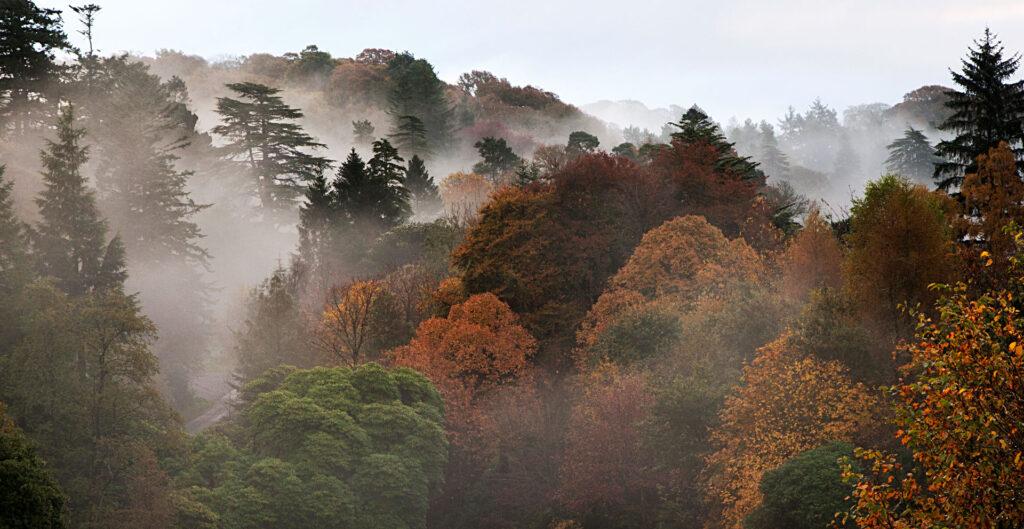
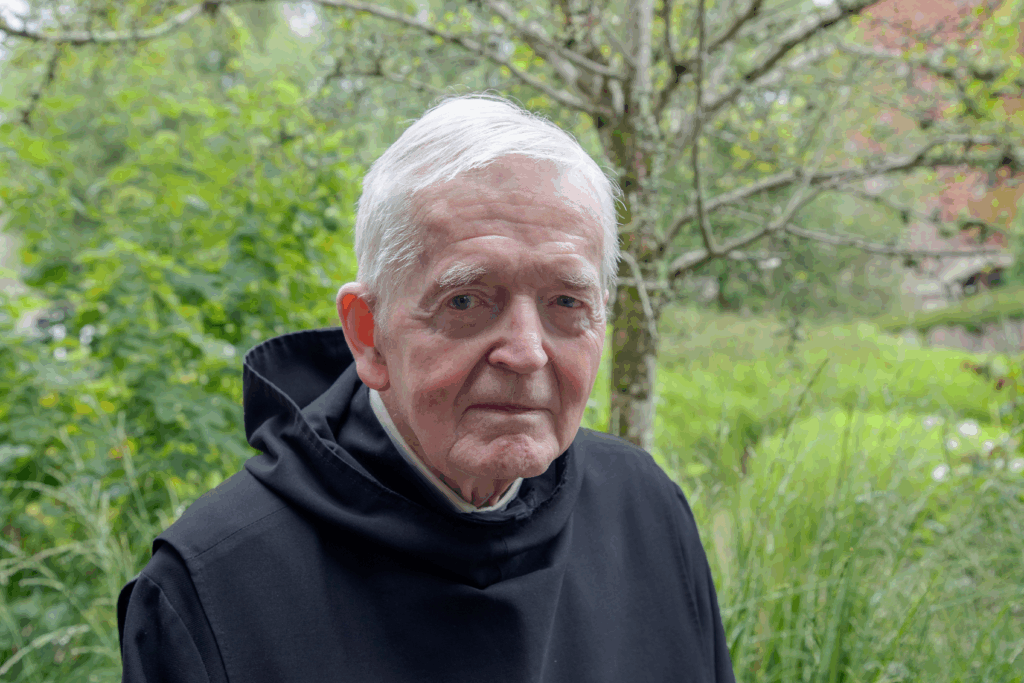
I have always liked – but for no morbid reason – the month of November, a month when the turning of the seasons mirrors the cycle of life and death. There is something about the days growing shorter and nature itself dying back into winter that connects in my being. For our Celtic forbears this was a liminal time, Samhain, when the veil between worlds became more transparent and the connectedness of both worlds became present. In all of this, nature herself calls us to remember those gone before us. The month is laced with ritual, beginning on All Hallows’ Eve, to the great interwoven feasts of All Saints on the 1st November and All Souls on the 2nd November, days of remembrance and remembering. These feasts, rooted in time and tradition, connect, celebrate and offer prayers for the departed as expressions of hope in the resurrection and eternal life.

The practice of commemorating the dead finds deep resonance in our Benedictine tradition. At the Abbey of Cluny in medieval France – one of the most influential monastic centres in Europe – the remembrance of the dead was woven into the very fabric of daily life. Founded in 910, Cluny became renowned for its spirituality, liturgy, learning, and architecture, but also for its spiritual concern for the souls of the departed. The Cluniac monks introduced the practice of offering regular Masses and prayers for the dead, formalising what would become the Feast of All Souls. This innovation spread throughout Christendom, shaping how generations of Christians would remember their ancestors and loved ones. This emphasis on remembrance was an act of profound faith in the communion of saints, a belief that we, the living, remain united with our dead in Christ through prayer and love. This in essence is what we remember during this month of November.

As in all parishes, this tradition finds quiet continuation here at the abbey in Glenstal. Woven through the monastic rhythm of prayer, reflection and work, is this thread of remembrance. Each day, at the conclusion of the various hours we pray ‘May the souls of the faithful departed through the mercy of God rest in peace’. In particular, at Midday Prayer on Sunday, we commemorate all our deceased brethren, relatives, friends, and benefactors as we chant;

‘With your holy ones, O Christ,

give rest to all your servants in a place of peace,

where there is neither pain nor sorrow but joy in everlasting life. Alleluia!’

In addition, within the Abbey grounds lies the Monastic Cemetery and the adjacent Garden Cemetery, a tranquil resting place set in nature. Here, monks, friends and benefactors of the Abbey are laid to rest amid trees, stone, and silence. It is a place of serenity. The graves are simple and the landscape itself through the seasons seems to pray. Many have chosen to make the Garden Cemetery at Glenstal their final resting place and in so doing support financially the work of the monastery.

Rather than a place of desolation, the cemetery here becomes a witness to continuity; between life and death, between past and present, between earth and heaven. The autumnal dying light, the rustling leaves, and the scent of damp soil all seem to join in the liturgy of remembrance. In this setting, history breathes gently and memory is renewed through the quiet chant of the monks.

Thus, for a Christian, November’s commemoration is not nostalgia; it is an act of faith and love. To remember our dead, ‘those gone before us marked with the sign of faith’, is to affirm that life transcends mortality; that those gone before us remain part of us, part of our spiritual family, as one day will we for those left after us. Remembrance is a sacred bridge between them and us, between here and there, between time and eternity.

May their souls and the souls of all the faithful departed,

through the mercy of God rest in peace. Amen

Pádraig McIntyre OSB

Find out more about Glenstal’s Garden Cemetery here.

Categories
Abbey | Latest News abbeynews

Funeral arrangements for Timothy McGrath OSB

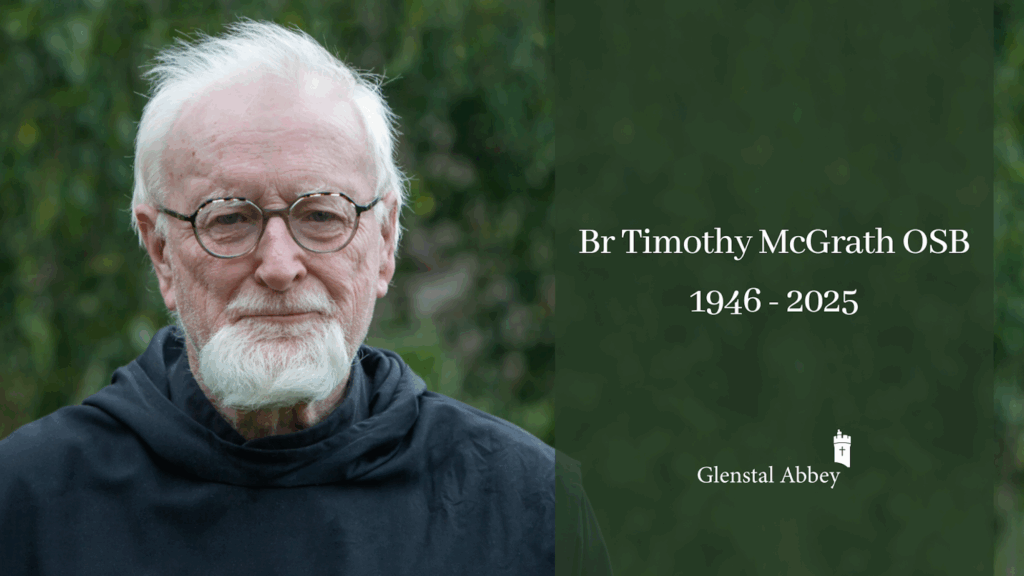
Br Timothy McGrath OSB passed away peacefully aged 79 on Saturday 18th October 2025. He is mourned by his community, his family and a wide circle of friends and colleagues.

He made profession of vows as a monk of Glenstal Abbey on 6th July 1973 and his work of service was rich and varied: novice master, teacher in our Abbey School, rugby coach and career guidance counsellor to senior students.

Facing up to significant illness over the last ten years with courage and a zest for life, Br Timothy left us suddenly, yet aware that his health was precarious. He was particularly saddened by the death of his brother Leo only three weeks before his own.

Eternal rest, grant unto him, O Lord, and let perpetual light shine upon him. May he rest in peace.

Funeral arrangements: reposing at Glenstal Abbey from 3.30-5pm on Friday 24th October, followed by removal to the Abbey Church and celebration of the Office of the Dead. Funeral Mass at 11.30am on Saturday 25th October, followed by burial in the Abbey Cemetery.

Categories
Abbey | Latest News abbeynews

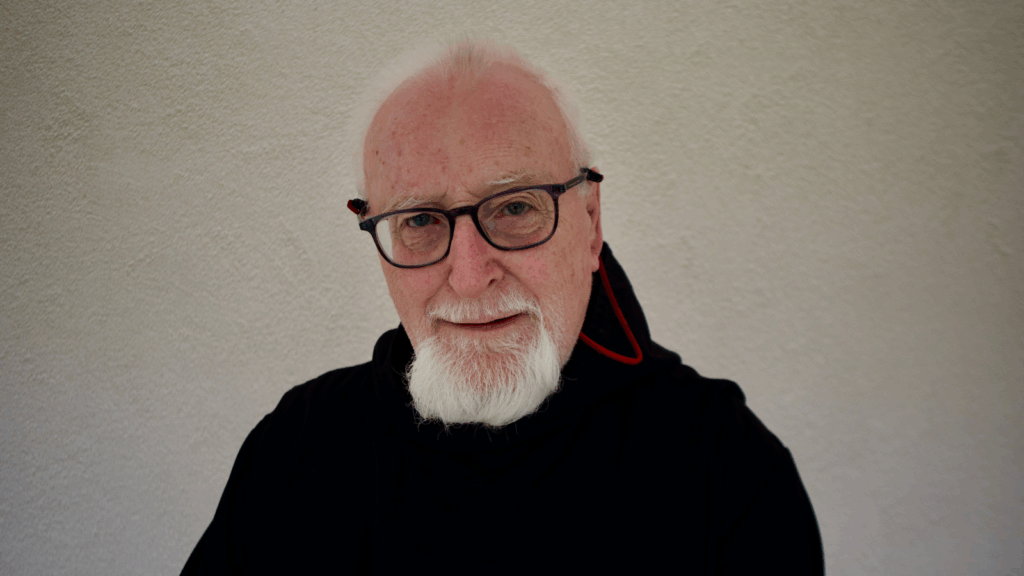
Br Timothy McGrath OSB

The monastic community announces with sorrow the death of Br Timothy McGrath OSB, a monk of Glenstal Abbey since 1971.

May he rest in peace.

Categories
Abbey | Latest News abbeynews

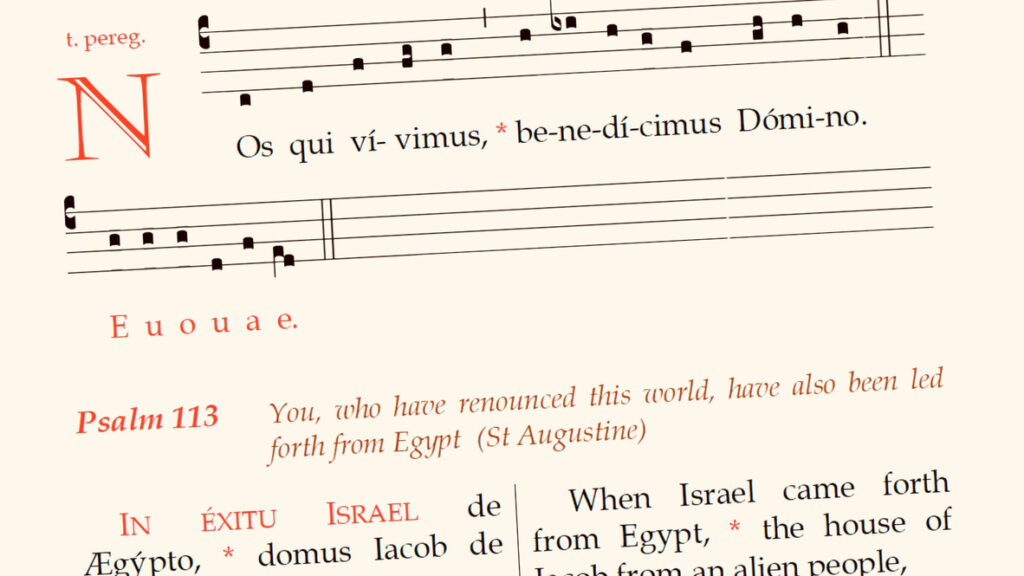
Sing to the Lord

Over the years many people have desired to join us in prayer by using the books which monks use in the monastic choir.

We’re delighted that a limited number have been now been printed to enable friends of the monastery to unite their prayers with ours, particularly when praying with us via the webcam.

A book for Vespers (Ferial and Memorials) and Compline is now available, with books for the other hours to be printed soon.

Write to guestmaster@glenstal.com to find out how to order your copy!

Categories
Abbey | Latest News abbeynews

Establishing Ewu

It would be inaccurate to say that the monks of Glenstal Abbey contributed to the establishment of our monastery in Nigeria, as if they were adding to something that already existed. In reality, they were the very foundation of monastic life at Saint Benedict’s Priory in Ewu-Esan in 1979. They did and were everything for us: erecting the first buildings, establishing plantations, recruiting and forming the initial community of monks, and raising the funds needed to feed, clothe, and train them.

They were monks of vastly different gifts and personalities. They were mystics, philosophers, teachers, scholars, preachers, linguists, musicians, farmers, builders, and much more. Those pioneering early monks were popular in the locality whenever they went out to celebrate Mass, something which was appreciated by the local faithful and non-Christians alike.

When the monastery’s turquoise blue Volkswagen Beetle hit the road, the villagers would run and thunder excitedly: “Father! Father! Father!” irrespective of the driver. The car’s identification with the monastery was enough to cause a great stir among the locals, particularly as “Father” would often stop to give a lift to as many people as could be accommodated inside, outside and on-top of the little car as it bounced its way along the village roads.

Those early monks were all past middle age, and would even be considered elderly by African standards… I recall a local priest cautioning me against joining the community as he believed “the monastic life is meant for old and frustrated people.” They were certainly older men, but they were not frustrated. They came with energy and the common purpose of planting the monastic life in Nigeria. We were blessed in the following years to be visited by generations of Glenstal monks who helped us with formation, classes, music, retreats, and so on. They brought a new dynamism to the community, and their creativity contributed positively to the monastery’s outlook.
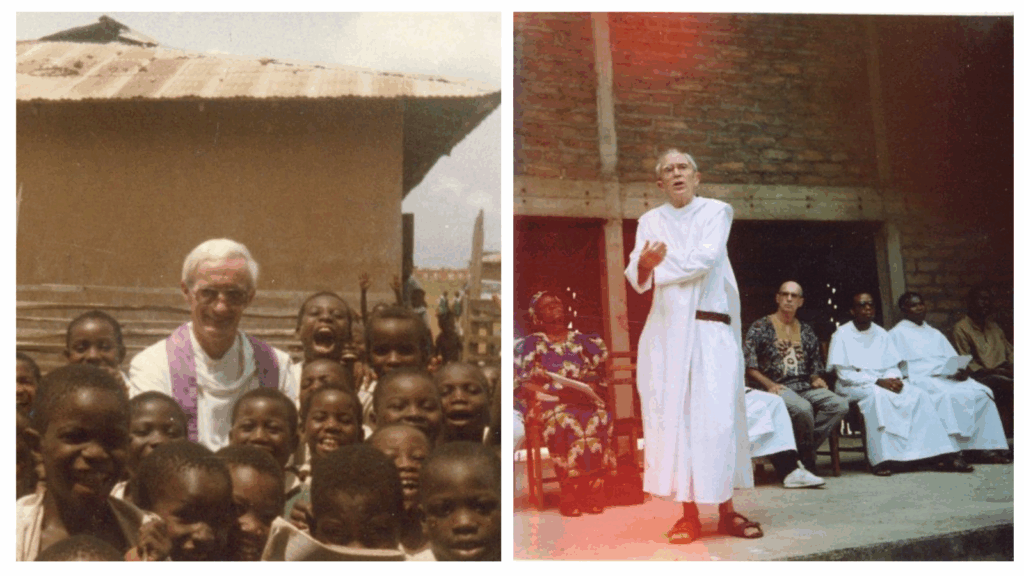
Looking back, one feels we owe those pioneering monks from Glenstal Abbey so much, especially for their efforts to establish an African monastery for Africans, rather than a community built along European lines here. It must have been a life of great sacrifice for these men, but it is one of the reasons they became revered and loved by all. Upon arrival, they observed local conditions and decided to go into agricultural work. They planted palm oil trees and – like local farmers – cultivated the yam, cassava, maize, plantain and melon which constitutes the diet of ordinary people, along with other vegetables and fruits like pawpaw, pineapple, bananas and oranges.

These Irishmen were used to potatoes and plenty of meat and fish, but soon they grew accustomed to eating mostly mashed yam and rice, with very tiny pieces of fish and meat during lunch on set days in the week. It was very obvious that they chose to identify with the local people, especially those at the margins of society. They soon began to resemble particularly impoverished Africans!
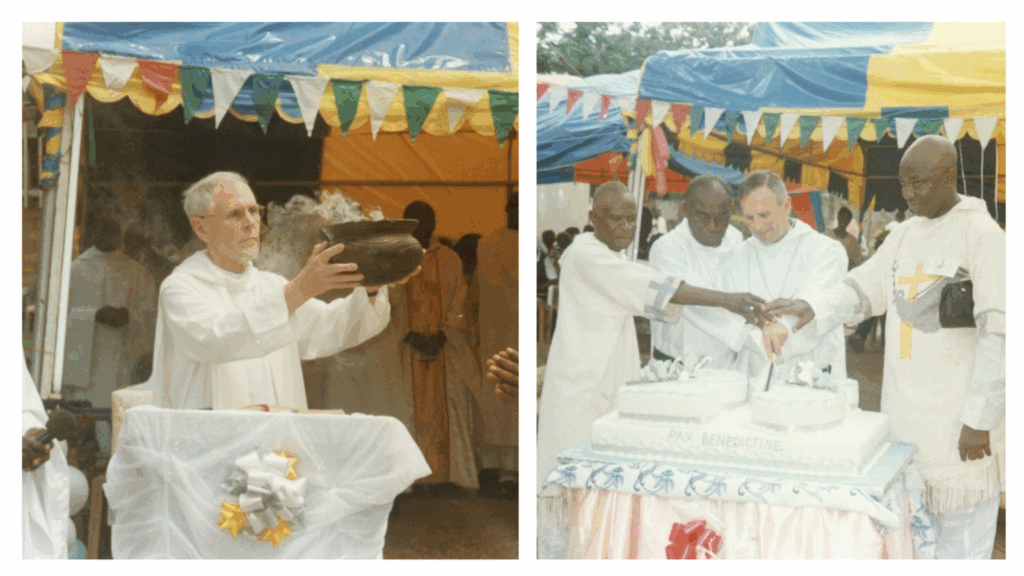
People didn’t see them as far off, distant, or unapproachable. Imagine the scene: many times a local woman would go into labour in the village, and her husband would run to the monastery in the middle of the night to call for help. One of the monks would appear, take out the famed turquoise blue Beetle and rush them to the hospital in the next town. It was run by Irish sisters, and the bill would be settled by the monks.

They lived simply, often precariously, and always close to the margins. They adopted what they could of African culture, and avoided imposing European ways onto the brothers. They guarded against the tribalism which is often common in African communities made up of members from different tribes, giving us today a strong community which is diverse yet unified.

These men were deeply convinced of their monastic calling, and they taught by their example of prayer, work, study and the common life. If the monastery were to fail today, it would be on our own heads and not on those of the Glenstal monks who made such a great sacrifice to create and hand over to us all that we have now. They laid the foundations in such a way that we, as native Africans, could shape the monastery with our own identity and culture. Abbot Augustine O’Sullivan would often remind us: “When the time comes, you Africans will decide for yourselves.”
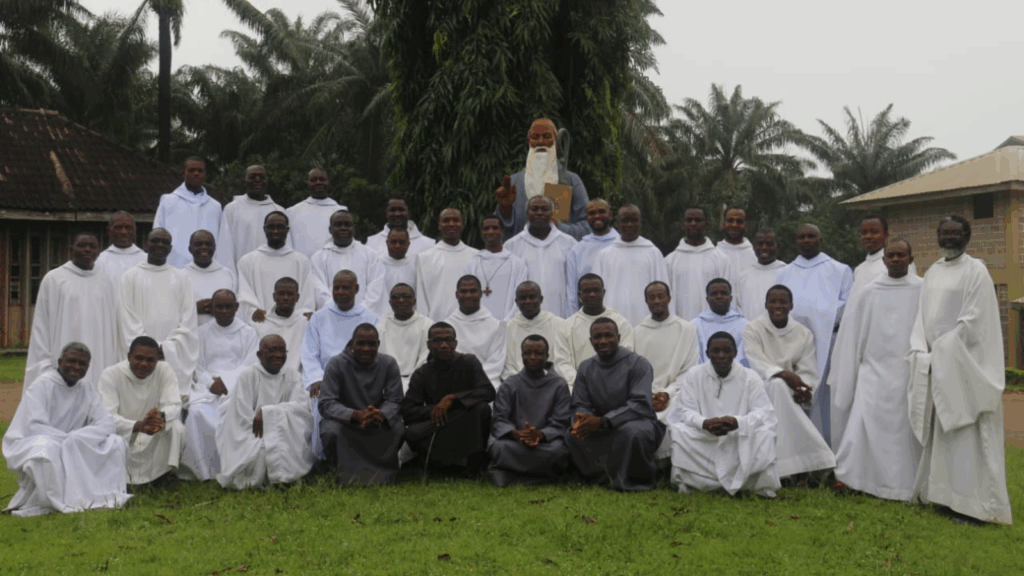
Today we are a community of over fifty monks from fifteen different Nigerian tribes, along with one Togolese confrère. The monastery’s layout resembles a traditional African village, with small residential blocks housing six monks each and a central building where the entire community gathers. The monastery’s architecture, liturgy and economic ventures all have an African feel to them. We seek to live a style of monastic life that is very much akin to the people and culture of this region, and a spirituality that the people of the place find no difficulty in identifying with and supporting.

There is a deliberate attempt to live a simple and pure monastic life, composed of the pillars of prayer, work and study in community. We rise each day at 3.30am with the beating of the Ekwe drum, before the day gets underway with a round of Vigils, time for personal prayer, and the celebration of Lauds and Mass from 5.30am. Between our daily work assignments we meet again in the church for communal prayer another four times during the course of the day, and retire to our cells sometime after 8pm. Our timetable is intense, as is the daily heat and humidity. There is time also for recreation and sports, and rarely is a brother absent from liturgy, table, work or community time.

During working hours monks can be found in the guesthouse or the herbal medicine centre, or at work in the bakery, candle factory or gift shop. We also run a farm of birds, pigs, goats, sheep and cattle, and have a palm oil plantation, vegetable garden and orchard.

The international press often reports on religious intolerance and violence by Islamic extremists in Nigeria, and we sometimes receive anxious calls and emails asking about our safety. While we have faced a few negative encounters with outsiders from other regions in the country, such incidents have been rare. Our monastery is located in Muslim territory, though the numbers of people following Islam, Christianity or Traditional African Religion are roughly the same. We have excellent relations with the local ruler and we find the Muslims here are very friendly.
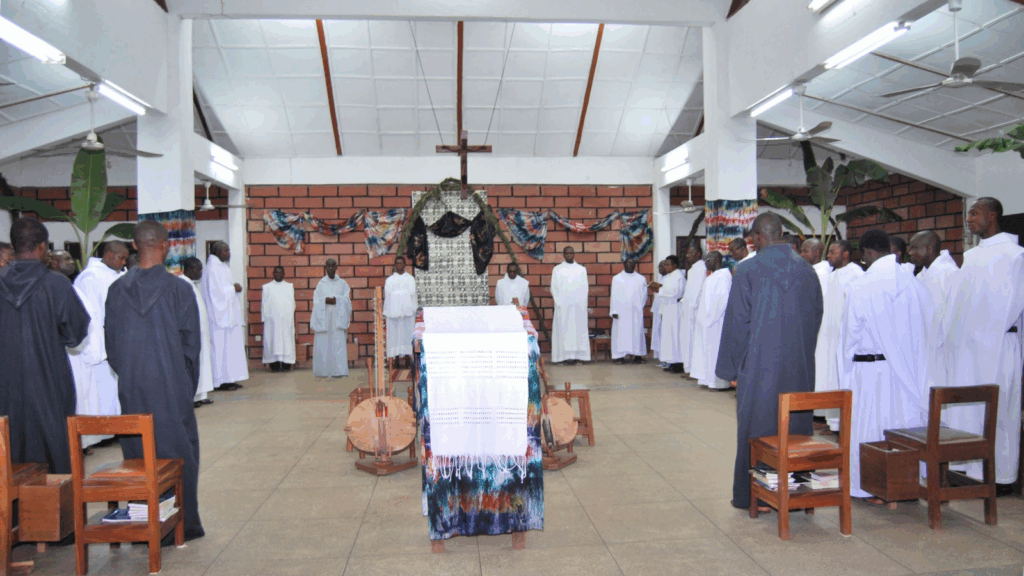
At Ewu, all three religions interact and there is no real tension as it’s not unusual to find practitioners of all three among the members of a single family. The monastery plays a significant role as a common meeting ground for the followers of different religions. Here there is no segregation, no discrimination. When it is the time for their prayers, some of the Muslim workers simply create a space for themselves, do the ablutions and follow their prayer rituals. All of our workers, irrespective of the religion, attend Mass on major solemnities and join in the entertainment afterwards. The relationship between the monks and the people in neighbouring villages is very good.

During this World Mission Month, when the Church prays for and supports missionaries around the globe, I find myself reflecting on what the Irish monks brought to Ewu — and what we, in turn, might offer back to Glenstal Abbey and the Irish Church. Glenstal made many sacrifices to bring this foundation to birth and nurture it to maturity. If our motherhouse were to ask for help, we would not see it as repayment but as fulfilling our duty to a parent. In African culture, caring for one’s elders is a source of pride. Thus Saint Benedict’s Priory at Ewu will always remain open and grateful to Glenstal Abbey, remembering our founders and all who followed them in support of our growth.

We are both communities of individuals with names and stories, not faceless numbers. Ewu has a duty to keep our bond with Glenstal alive and fresh through regular communication and visits. We are also finding ways to honour the memory of each Irish monk who came to Ewu; the comprehensive list is quite long!

Every year, Saint Patrick’s Day is celebrated as a solemnity at Ewu. On this great feast we give thanks to God for the Irish monks who came here, for our very existence through them, and for the entire Glenstal community. When I visit the motherhouse in Ireland, I never fail to go to the cemetery to pray for those who now sleep there, asking for their intercession so that the brilliant torch which Glenstal Abbey has handed on to us may never cease to burn brightly.

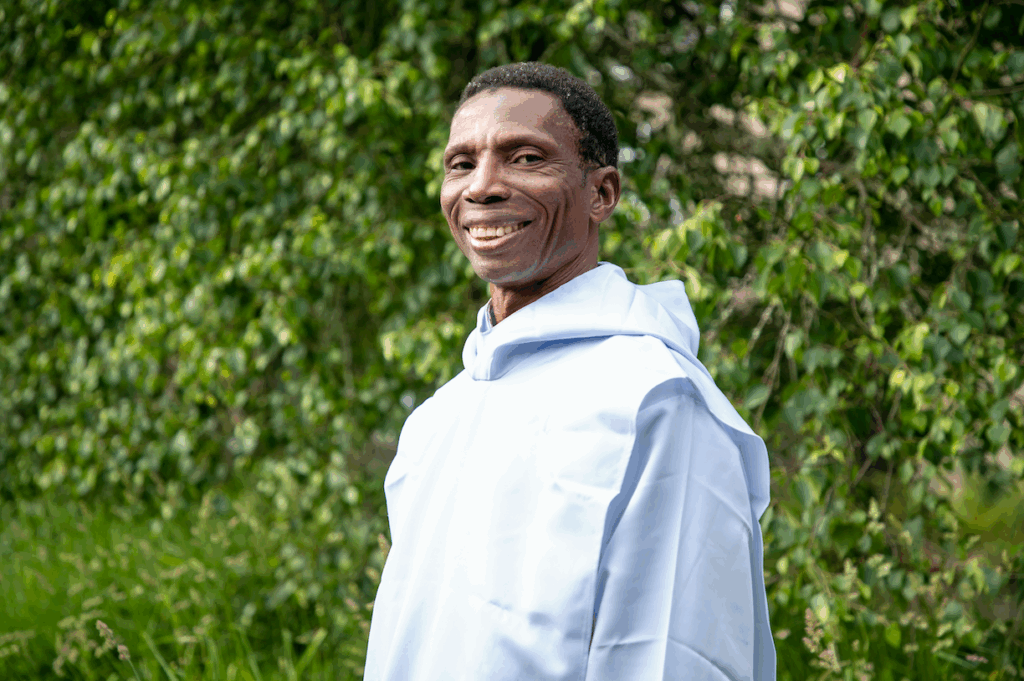
Peter Eghwrudjakpor OSB is superior of Saint Benedict’s Priory at Ewu-Esan in Edo State, Nigeria.


Categories
Abbey | Latest News abbeynews

School Open Day

Discover how your son can thrive at Glenstal Abbey School at our Open Day next Saturday 27th September at 10am!

Register here: zurl.co/K8Inu

Categories
Abbey | Latest News abbeynews

Ón Leanbh Aonteangach don bhFear Ilteangach

Roimh Lá Eorpach na dTeangacha, déanann an Bráthair Cillian Ó Sé OSB machnamh ar a thuras ó leanbh aonteangach go fear ilteangach…

Rugadh mise ar an 1940 i gCathair Chorcaí. Tógadh mé sa chathair freisin go dtí go raibh mé 20 bhliain d’aois. D’fhreastal mé ar an mbunscoil ba chomhgaraí do theach mo mhuintire. Bhí na ranganna go léir trí Ghaeilge, seachas na ranganna i mBéarla agus Teagasc Críostaí. Ní raibh aon Ghaeilge ag mo thuismitheoirí; dá bhrí sin, ní raibh ar a gcumas aon chabhair a thabhairt dom le m’obair bhaile!  Dalta ciúin a bhí ionam; le an-dhúil agam i léitheoireacht. Nuair a fhág mé an bhunscoil, bhí Gaeilge cuíosach maith agam, ach ní raibh aon tseans agam í a chleactadh taobh amuigh den seomra ranga. Freisin, bhí an Béarla mar ghnáth-theanga chumarsáide sa mheánscoil nua, cé go raibh an t-ádh liom go raibh múinteoir maith agam i gcóir na Gaeilge – fuair mé toradh maith san scrúdú Ardteistiméireachta san ábhar sin. An t-aon teanga iasachta a múineadh sa scoil ná an Laidean. Fuair mé amach gur chabhraigh graiméar na Laidne go mör liom structúr na Gaeilge agus nua-theangacha eile a thuiscint. Freisin, nuair a bhí mé sa Chúigiú Bhliain, fuair mé ranganna príobháideacha sa bhFraincis.

Timpeall an ama sin, chuaigh mé isteach sa Bhuíon Ghaelach, buíon choisithe san bhFórsa Chosanta Áitiúil (FCÁ) ina raibh an traenáil iomlán as Ghaeilge, mar a bhí an gnáth-chumarsáid idir na saighdiúiri. Bhíodh na campaí samhraidh go léir againn sa Ghaeltacht, mar shampla i gCúil Aodha nó sa Mhuiríoch. B’shin í mo chéad seans seal a chaitheamh i dtimpeallacht lán-Ghaeilge.

Agus an Ardteistiméireacht faighte agam, chuaigh mé ar Choláiste na  hOllscoile Corcaigh (UCC) agus fuair mé céim i nEalaíona (BA) le Laidean agus Stair mar phríomhábhair. Ansin fuair mé an an tArd – Teastas i nOideachas mar cháilíocht iarchéime a thug ceart dom múineadh ar mheánscoil. Le linn an an ama sinn go léir bhí mé ag freastal ar ranganna seachtiniúla i nGearmáinis, agus shocraigh mé freastal ar dhianchúrsa sa teanga sin sa Ghearmáin féin a bhí eagraithe ag an Goethe-Institut, institiúd cultúrtha Rialtas na hIar-Ghearmáine. Ag deireadh an chúrsa sin, a mhair 10 seachtain, bhí buntús na teangan im ghreim agam.

Bhí an seal a bhí caite agam san FCA tar éis mo shuim sa saol mileata a neartú, agus i 1963 chiuir mé iarratas isteach ar choimisiún gearr-théarmach i nArm na Breataine. Níor chreid mé i bpolasaí na neodrachta a bhí ag Éirinn, agus shocraigh mé dá bhrí sin mo sheirbhís a dhéanamh i stát a bhí ina bhall de NATO. Chaith mé trí bliana mar leifteanant san RAEC (Royal Army Education Corps) ag múineadh ábhar éagsúla do shaighdiúirí óga i nAlbain. Le linn an ama sin rinne mé dhá mhalartú le hArm na hIar-Ghearmáine (i Hamburg agus Wolfenbuettel) agus ceann amháin le hArm na Fraince (i Le Mans); freisin, bhain mé amach cáilíocht mar Teangaire Mileata sa Ghearmáinis ó Stát-Sheirbhís na Breataine.

Nuair a fhill mé ar Éirinn tar éis mo sheirbhíse mileata, fuair mé cead speisialta ó UCC an scrúdú BA a dhéanamh i nGearmáinis. Fuair mé onóracha den gcéad grád, agus shocraigh mé céim MA a dhéanamh san ábhar céanna i nOllscoil Briostó. Ina dhiaidh sin, fuair mé seans scoilbhliain a chaitheamh san Iorua ag múineadh Béarla agus Gearmáinise i n-iarbhunscoil i ndeisceart na tíre. Theastaigh uaim teanga eile Theotanach a fhoghlaim. Ní raibh focal amháin Ioruaise agam nuair a thosaigh an scoilbhliain. Rinne mé dianchúrsa sa teanga, mar bhí fonn orm a fháil amach an mbeadh ar mo chumas teanga nua a fhoghlaim tré thomadh iomlán a dhéanamh innti gach lá, ag léamh nuachtáin, ag éisteacht leis an raidio, ag caint le muinteoirí agus daltaí, etc. Toisc nach labhairtear an Ioruais go forleathan taobh amuigh den Iorua, bíonn Béarla ar a thoil ag beagnách gach Ioruach, ach d’iarr mé ar mo leath-bhádóirí sa scoil gan Béarla a labhairt liom i gcruinnithe le linn ár ama saoir. Rinneadar amhlaidh, agus bhí áthas orthu gur theastaigh ó eachtrannach a dteanga dúchais a úsáid ina dtír féin. I ndeireadh na scoilbhliana bhí mé an-shásta go raibh ar mo chumas drámaí Ibsen a léamh sa bhunleagan.

Cúpla bliain ina dhiaidh sin, chothuigh an bhliain a chaith mé san Iorua suim ionam scoilbhliain a chaitheamh sa Ghearmáin chun snas a chur ar mo chumas sa teanga sin. Fuair mé post i scoil chónaithe i dtuaisceart na tíre ar an dteorainn leis  an Ísiltír. Bhí lóistín agam ar champas na scoile, agus mé ag múineadh teangacha iasachta: Béarla, Fraincise agus Laidne. Thaitin an obair chomh mór sin liom gur fhan mé naoi mbliana (seachas bliain amháin!) ar an scoil sin, Chaitheadh mé laetheanta saoire gach bliain in Éirinn, agus diaidh ar ndiaidh d’aithin mé go raibh nósanna na Gearmáine ag dul i bhfeidhm chomh mór sin orm go raibh mé ag éirí “Germanior ipsis Germanis” , agus go raibh baol ann go ndéanfainn dearmad iomlán ar mo dhúchas Ghaelach. D’fhill mé ar mo thír dúchais i 1981 agus le 41 bliana thosaigh mé mo shaol mar mhanach. Thóg mé na móideanna solamanta i 1992, inar gheall mé fanúint im mhanach go dtí lá mo bháis. Mar adeir an seanfhocal: “Go bhfaighimís grásta Dé agus bás in Éirinn!” Amen!

Cillian Ó Sé OSB

Categories
Abbey | Latest News abbeynews

Changes to opening hours/liturgy times

Please note changes to the liturgical timetable and opening hours during the monastic community’s annual retreat which takes place from Monday 4th to Saturday 9th August:

  • Matins and Lauds: Celebrated at 7am from Tuesday 5th August to Sunday 10th August.
  • Mass: No change to the usual timetable.
  • Vespers: No change to the usual timetable.
  • Compline: No Compline in the Abbey Church on Monday 4th, Thursday 7th and Friday 8th August.
  • Guesthouse: Closed from 3rd to 11th August.
  • Monastery reception and shop: Open between 10am-4pm from 28th July to 9th August.
Categories
Abbey | Latest News abbeynews

A spirituality of summer

The concept of a summer spirituality may seem unusual, but the rhythm of the Christian liturgical year can be seen to invite some such phenomenon in our spirituality. The widely acknowledged relationship between the liturgical season of Lent and spring already establishes the beginnings of the connexion between the annual rhythm of nature and liturgical expression.

Easter, as the climax of Lent and spring, bursts upon the northern hemisphere with an eager celebration of light and the promise of early summer. The blossoming trees promise the fruits of a following harvest, through summer and autumn. Meanwhile, the leisurely fifty-day celebration of Eastertide leads up to Pentecost, to mark the release of the energy of the Holy Spirit into time and people; and the splendid feasts which follow, the Holy Trinity, Corpus Christi, the Sacred Heart of Jesus, the Immaculate Heart of Mary luxuriate in this demonstration of divine graciousness.

All this is reflected in the natural sphere, as spring’s new growth matures with summer, buoyed by the Spirit’s energy of life and the earth produces its good things, in vegetables and soft fruit. All this will climax with the longer lasting fruit of Autumn in the apples and pears, when the feast of Christ the King brings the year to its conclusion. Then the earth will enter into its Winter sleep, when Advent invites us to take stock and to begin again with our wonder at the birth of Life in the Son of God.

Christopher Dillon OSB

Categories
Abbey | Latest News abbeynews

Pax inter spinas

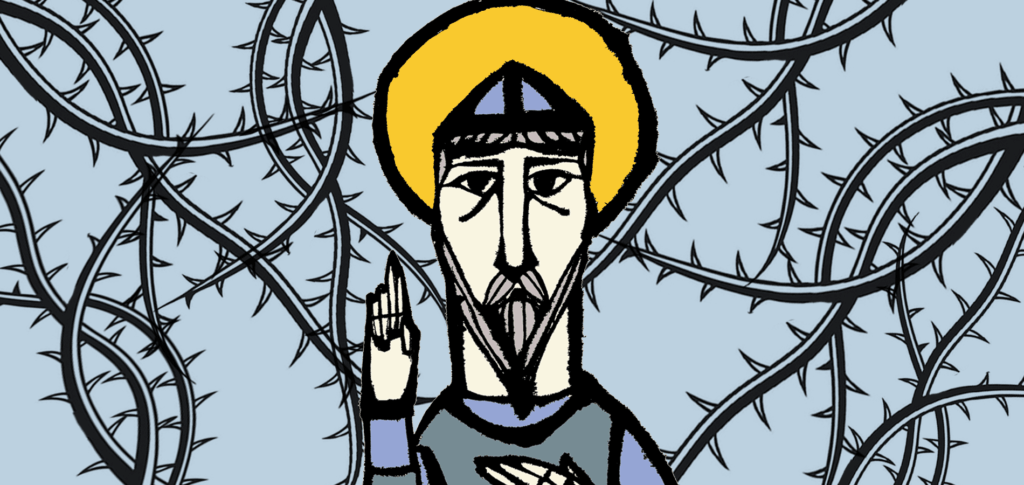
Visitors to the Abbey cannot but notice the word ‘PAX’ over the castle archway, an invitation and hope that all may find, experience and dwell in peace in our monastery. A longer version of this Latin motto for the Benedictines is ‘pax inter spinas’, meaning ‘peace among thorns.’

Much like Saint Benedict himself, we are living in a thorny time. The prickly days of our founder saw him seek refuge from the decadence of Rome and the collapse of its Empire, whilst in our time we find ourselves haunted by the memory of pandemic, appalled by scenes of intercommunal violence on our island, dismayed by political instability across the ocean, and concerned by the bloody conflicts raging in Europe and the Middle East.

The temptation – especially for monks – is to pull up the drawbridge and keep the problems of the world at the gate. It’s not just the chaos of the world that we sometimes wish to flee from, but also growing trends such as secularism, moral relativism and hostility to the Christian faith. In such a scenario, some advise detachment from the world and rejection of our popular culture, with the American conservative writer Rod Dreher going as far to ask:

‘could it be that the best way to fight the flood is to stop fighting the flood? That is, to quit piling up sandbags and to build an ark in which to shelter until the water recedes and we can put our feet on dry land again?’ [1]

Dreher goes on to propose small communities exile themselves from the popular culture in order to construct their own counterculture of shared Christian life, values, and worship.

Appealing as it might sound, such a course of action isn’t an option for those of us who are called to be a leaven of the Gospel in the world around us. Benedictine life was forged in the chaos of the Roman Empire’s collapse, and whilst it was countercultural it was never meant to be escapist. Indeed, according to Cardinal Basil Hume OSB, there has always been a tension on the question of whether the monk ‘is a person who withdraws into the desert to pray and be alone with God, or is he someone who goes out into the marketplace to mingle with and serve the people?’ [2]

Monastic life isn’t a call to isolation, but rather to presence: a stable, faithful presence in the midst of the world’s suffering, questions, and hopes. The monastery is not so much an ark set adrift from society, but a lighthouse rooted on the shore — lit not for our own sake, but to guide others through storm and darkness, and to serve the world around by our prayer and work.

It may be for this very reason that Abbot Columba McCann OSB recognised: ‘the worst days of the pandemic brought home to us just how interconnected we are on our planet, even at a spiritual level. Part of our task as monks today is to keep rediscovering what it is we bring to the Church and the world, and what God wishes to bring to others through us.’ [3]

Living in the Middle East these past four years, I’ve come to witness first-hand the thorns of this region and the need to seek, establish and share peace between these prickles. Monasteries have always sought to be places of peace, order, and communion that ripple outward, and thus it seems our task as Benedictines today might be to take seriously the intention of our motto, ‘pax inter spinas’, and dwell among the thorns of our time, offering a witness of peace to a world badly needing it.

The ‘PAX’ we seek is peace with God, with ourselves, with our brethren, and with the world around us. Amidst the thorns of his life, and the thorns of his community and the world outside, the monk seeks peace and radiates it according to the instruction of Saint Benedict: ‘let peace be your quest and aim.’ [4]

We all live amidst thorns of one sort or another, and Saint Benedict has provided us with a model so that we may dwell in peace among them. To live pax inter spinas is to refuse to despair, to persist in love, and to trust that even in the most tangled and bloodied places of our world, peace can take root.

May all who pass under the archway into our Abbey find peace, and have the courage to carry that peace beyond our walls.

Saint Benedict, pray for us.

Justin Robinson OSB

[1] Rod Dreher, The Benedict Option (New York: Sentinel, 2017), 12.

[2] Basil Hume, Searching for God (London: Hodder and Stoughton, 1979), 9.

[3] Columba McCann, “Abbot Columba receives abbatial blessing.” Glenstal Abbey, November 2024. https://glenstal.com/abbot-columba-receives-abbatial-blessing/. Accessed 22 June 2025.

[4] Saint Benedict in Timothy Fry, ed. The Rule of St. Benedict in English (Collegeville, MN: The Liturgical Press, 1982), 16.

Subscribe To Our Newsletter To Receive Updates

[hubspot type=form portal=6886884 id=9e1d6d0d-c51e-4e35-929d-3a916798de64]