Categories
Abbey | Latest News abbeynews

Continue our journey – the next 100 years

We are asking for your support.

On Sunday December 19th 2027, Glenstal Abbey marks 100 years since the official beginning of monastic life in this place; the Barrington estate was entrusted to us in May 1927. Since those early days, successive generations of monks, responding to the signs and needs of their time, have courageously built and developed, planned and visioned into the future.

The life and work of this community has influenced the fields of liturgy, hospitality and education, ecumenism, spirituality, the arts, music, literature, research, agriculture, forestry, renewable energy, and much more. It has and continues to be a place of encounter, enrichment and peace for countless people. It is a place where people connect, a place where many of you find belonging and shared vision.

In this last 100 years, all that has been achieved is due in no small measure to the kindness, generosity and support of so many. For all that has been given and gifted, for the connections and relationships, all these blessings that we have received, the monastic community are profoundly grateful. For you, we give thanks to God.

Now as we turn towards the next 100 years, we ask you, friends and benefactors to continue the journey with us. We ask you to continue to believe in and support us. We live and minister in a changing world where monasteries are more needed than ever. People come here in great numbers, to engage both mind and senses in exploring the mystery of themselves and of God, to find rest, to reflect, and to renew their spirit. Many, unable to be physically present connect with us through the Abbey’s webcam, newsletter and Chronicle.

As we continue responding to the needs of our time, our estate, and the built and natural environment needs investment and upgrading. We need your help, as we cannot do this alone. From the monthly or yearly contribution for the day-to-day running of the Abbey and estate to the large project funding, you can help in many ways according to your means.

Donating

Regular Giving is the simplest and most efficient way to do this. Setting up a monthly transfer takes the hard work out of the process for you and is most beneficial to us. A regular donation according to your means is what we ask of you.

One-off larger donations will go to the Glenstal Development Fund. This fund allows us to budget and plan for capital projects. We have through the generosity of our donor now completed the 4 year restoration of the castle exterior. 2026/2027 will see strategic planning with regard to other elements of the Abbey campus. We will be asking your support particularly in the areas of green energy, building upgrade and hospitality facilities, to name but a few.

Tax Efficient Giving benefits us if your individual or company monthly/yearly donation amounts to between €250 and €1m in a calendar year, Glenstal Abbey can claim the tax back through The Charitable Donation Scheme (Revenue.ie). Should you reach this threshold, with your permission, we will contact you to help us make this claim.

A Bequest in your Will or Trust is the most common, and simplest, way to support the monastery by naming Glenstal Abbey Trust as a beneficiary in your will or other estate planning documents. Bequests can be specified amounts, or part of or all of your estate after settlement of any obligations. Consultation with family members is important in this regard. Bequests to Glenstal Abbey generally are deductible for estate and gift tax purposes.

All and any support is most welcome. If you have questions, or would like to discuss anything in more detail, please do contact our Bursar, Br Pádraig McIntyre OSB, on 061-621000 or email bursar@glenstal.com. You can also make a donation directly:

Donate here

Glenstal Abbey Trust (Charity Name)

CHY4001 (Charity Registered Number)

Glenstal Abbey Murroe, County Limerick, V94 TK61 Ireland

Categories
Abbey | Latest News abbeynews

A reflection for Lent

Saint Benedict took Lent seriously. He dedicates Chapter 49 of his Rule for monks to the ‘Observance of Lent.’  He doesn’t mince his words – ‘the lives of monks should be Lenten in character at all times.’ But he quickly acknowledges that most of us are not able for that and urges us at least to make an extra effort ‘in these holy days to atone for what was neglected at other seasons.’ And he says this will be done worthily if we abstain from vice, if we work at prayer with tears, at reading with compunction of heart and abstain from some food, drink and or sleep.

Benedict’s categories of reading, prayer, compunction of heart and abstinence seem like things we easily neglect at other seasons. But they are necessary if we are to live well, to live wisely, in this distracted, restless world. Living within our ‘culture of comfort,’ it is good and even necessary to take a ‘pull’ on ourselves and do something by way of stretching our lives; take aim at areas we have neglected in our daily round.

Benedict ends his chapter warning his monks that they must set off on their own project of reform but submit what they intend doing for Lent to the Abbot to avoid ‘vainglory and presumption.’

When I joined the monastery over fifty years ago, we had a practice that reflected Benedict’s advice. Each monk drew up a list of things he would do for Lent. The list had to include: a book to read, a virtue to practice and some food to abstain from. This list had to be presented to the Abbot before Ash Wednesday for approval.

Of these three spiritual disciplines, the practice of virtue is not something we hear much about these days. A virtue has become the trait of the ‘goody good’ rather than a useful spiritual practice. Unless it comes in just ‘one click’ we are not interested. This is to our detriment. Virtues opted for and practiced are our allies and fortify us to live well as we wade out into the mainstream of life’s many challenges.

Any number of virtues suggest themselves, such as reverence, gratitude, patience. Maybe patience is the one we need to practice more than any other these days. Carlo Carretto, who spent over 20 years in the Sahara desert as a monk, was asked when he emerged if God had asked anything of him during his long silence. His answer was clear and unambiguous: ‘God is asking us to be patient.’

We are no longer used to being patient. We expect things to happen immediately and with ‘one click’ and become irritated or even angry at any delay. It wasn’t always so – throughout most of human history, patience was not a choice – our ancestors waited for light, waited for the harvest, for rain, for news.

The dictionary definition of patience may surprise you: ‘the capacity to accept or tolerate delay, problems, or suffering without becoming annoyed or anxious.’  I was surprised by the tenor of this definition particularly by the inclusion of suffering.

‘The greatest temptation of our time,’  says Eugene Rosenstock Hussey, ‘is impatience in its full original meaning – a refusal to wait, undergo, suffer. We seem unwilling to pay the price of living with our fellow people in creative and profound relationships.’

We are in a hurry and want, even demand, the quickest, the fastest, and are contemptuous of slowness. But human life, especially spiritual life, does not do speed. ‘There are no shortcuts’ says Eugene Peterson, ‘to becoming the person we are created to be.’  Human life is complex and deeply mysterious and requires a ‘deep passion for patience.’

Why not take Benedict’s advice? Select a book that will move you closer to the Lord; abstain from some food (fasting has been shown to be beneficial in so many ways, and not just spiritually!) and practice a virtue… maybe even patience.

Simon Sleeman OSB

Categories
Abbey | Latest News abbeynews

In search of a new identity

The times in which we live are among the most challenging, both for the world and for the Church. As Christians, we experience time as marked by the cycle of feasts. In last month’s newsletter, we were introduced to the beautiful tradition of announcing the movable feasts of the newly begun year, which traditionally takes place on 6 January. This month, it may be a good opportunity for us to pay closer attention to the feasts of the saints whom we commemorate throughout the year.

We have just celebrated one of them: a great saint of Ireland, Saint Brigid of Kildare. Brigid, with her distinctive voice and her ways that challenged established patterns of thinking, was part of a period of great religious fervour on this island. This was soon followed by the remarkable missionary zeal of the Irish, who tirelessly carried their enlightened faith to Scotland and Britain, and further onto the European continent. These were turbulent times, yet the contribution of the Irish monks helped to establish a new and lasting identity for the peoples of Europe, particularly in France, Germany, and Italy.

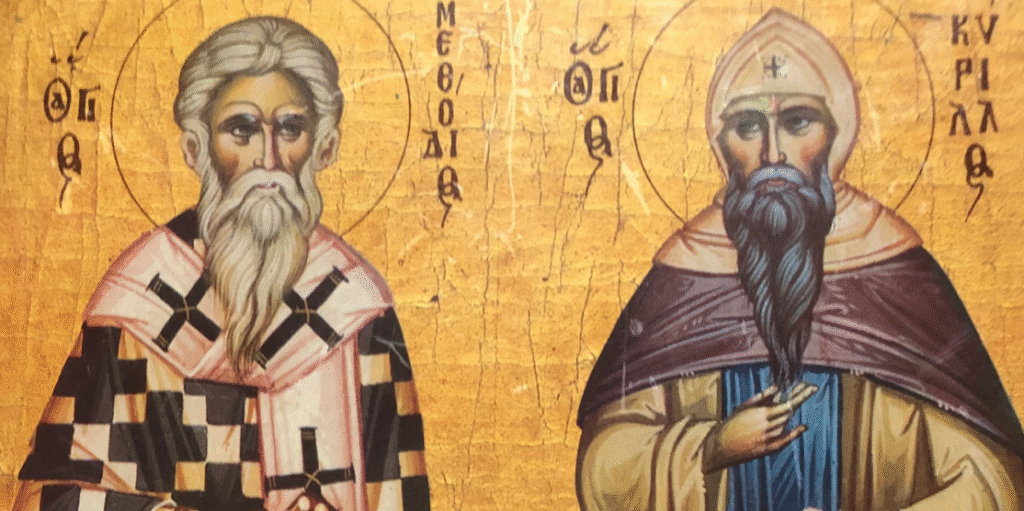
A parallel work was undertaken later by Bulgarian monks in the eastern parts of Europe. On 14 February, we will celebrate the founders of that missionary movement, Saints Cyril and Methodius. Not only did these brothers, together with their companions, evangelise a vast area of the continent, but they also established a new language for that purpose, known as Old Bulgarian, or Old Church Slavonic. They recognised that, in order to reshape the mindset of the peoples they encountered, a new tool of communication was necessary. Through the spread of this language, their mission reached as far north as Great Moravia.

Centuries later, Leoš Janáček, a composer from the land reached by those Bulgarian saints—now known as the Czech Republic—made a remarkable connection with the history of his homeland. Although he described himself as a non-believer, Janáček composed the Glagolitic Mass, a deeply moving work of liturgical music that pointed to the alphabet devised by Cyril and Methodius for the construction of their language. That alphabet would go on to shape the identity of many countries in Central and Eastern Europe.

Less than twenty years ago, Janáček’s compatriot and devoted admirer, the writer Milan Kundera—who had lived in exile in Paris since 1975—attempted to make sense of the composer’s mindset. “Who was he?” Kundera asked in one of the essays in his Encounter. He went on to question Janáček’s stature: “A provincial character under the spell of folk music, as he was persistently described by the arrogant musicologists of Prague? Or one of the great figures of modern music? And in that case, of which modern music? He belonged to no recognised trend, no group, no school. He was different, and alone.”

One of the brothers who established the mysterious Glagolitic alphabet, Saint Cyril—after whom the better-known Cyrillic alphabet is named—went to Rome toward the end of his life. His relics now rest in the church of San Clemente. Remarkably, in our present context, this church has long been cared for by Irish Dominican priests.

The question, then—for Rome and for the Church, for Europe and for the whole world—is this: where are we to look for the new identity so urgently needed today? Is it to be found in established patterns of thinking, in what is already recognised? Or must renewal come from what has so far remained isolated, different, and alone?

For anyone who truly cares about the future of the Church and of the world, the task is to apply themselves to a re-reading of the sources of our cultures. In Greek—the primary language of Cyril and Methodius—this act of re-reading is anagnosis, which literally means “re-cognition.” It is imperative that we re-cognise our own identity, our values and traditions, and ultimately the depths of who we are as Christians, as Europeans, or simply as inhabitants of this world. This may be the only way forward in these most challenging of times.

Jarek Kurek OSB

Categories
Abbey | Latest News abbeynews

Proclaiming time and seasons

As we enter the New Year, my social media feed is full of advice on how to set and achieve goals for 2026, while my email inbox overflows with offers for gym equipment and self-improvement plans. But I’m not quite ready for all that — and perhaps you aren’t either.

If so, I’d like to draw your attention to a quiet gesture the Church offers in the upcoming feast of Epiphany: the singing of the Proclamation of the Date of Easter, sometimes called the calendar of movable feasts. After the Gospel, the Church solemnly announces the dates of Easter and the great feasts that flow from it. Time itself is named, blessed, and gently ordered around the mystery of Christ’s death and resurrection.

For those shaped by monastic life, this moment resonates deeply. Monasteries live by a calendar that is both intensely practical and profoundly theological. Bells ring, psalms return, seasons change, and feasts arrive whether we feel ready or not. The Epiphany proclamation reminds us that our lives are not simply a series of personal plans or private resolutions, but part of a shared rhythm — a common life in time.

There is something quietly countercultural about singing the year into being. Instead of asking, “What will I achieve?”, the Church asks, “How will we receive what is given?” As this New Year opens, rather than turning first to goal-setting videos or productivity advice, you might look instead to the singing of the Proclamation of the Movable Feasts from St Peter’s in Rome, where the year ahead is named and entrusted to God. In that same spirit, the dates of the movable feasts for 2026 are set out below, so you can take a screenshot and return to them when the year begins to unfold.

May we live this year, in all things, that God may be glorified.

Oscar McDermott OSB

The Year Ahead — Movable Feasts 2026

Ash Wednesday – 18 February

Easter Sunday – 5 April

Ascension of the Lord – 14 May
(in some dioceses celebrated on Sunday 17 May)

Pentecost Sunday – 24 May

Corpus Christi – 7 June

First Sunday of Advent – 29th of November

Categories
Abbey | Latest News abbeynews

Remembering Gerard McGinty OSB

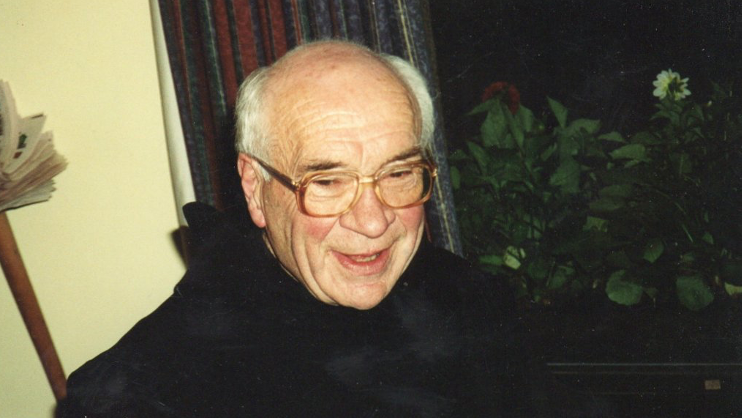
This week the monastic community remembers Father Gerard McGinty OSB whose anniversary occurs at this time. Born Francis Patrick Joseph McGinty in Dublin on 12th March 1929, he was educated by the Jesuits at Belvedere Collegeand entered Glenstal on 10th October 1948, receiving the name Gerard. He was professed on 6th January 1950 andstudied theology at Glenstal, Maredsous and Sant’Anselmo before his ordination to the priesthood on 11th July 1954.

After his ordination he began post-graduate studies at University College Dublin. Following some delays, these studies culminated in a Doctorate in Medieval Studies, which he obtained in 1971. His dissertation was an edition of an important Irish treatise, De Mirabilibus Sacrae Scripturae, written around the year 655.

Although Father Gerard held a variety of offices in the monastery and was a long-term Master of Ceremonies, Sacristan and Annalist, he was essentially a monk-scholar. Excelling in the editing of medieval religious texts, he was an expert in Hiberno-Latin. He edited the Glenstal Bible Missal (1983) and Today We Celebrate – the Saints and their Message (1985). Father Gerard made a major contribution to the three-volume Divine Office. In a pre-computer age of the 1970s, he was modestly proud that, as he put it, “every word of the three volumes of the English Breviary passed through my fingers.”

In 1980, he published a short commentary on the Rule of Benedict for the 1500th anniversary commemorations of the saint’s birth. He also composed a martyrology for monastic use. There was a practical side to Fr Gerard. He was one of the first in the community to master the complexities of the computer and for a number of years he was responsible for the maintenance of our telephones.

He also liked outdoor work, and spent much of his free time managing our garden and orchard. His knowledge of birds was extensive and he was keenly interested in all aspects of nature and wildlife. From its foundation in 1968, up to his death, Father Gerard was the official representative of Birdwatch Ireland in its survey of the two ‘squares’ that covered the townlands of Glenstal and Cappercullen.

At a spiritual and pastoral level he was a man of faithful observance who was always available for the hearing of confessions, the counselling of people with problems and the giving of blessings. Faithful to the end, it was in the course of a full working day that he died on the evening of Saturday 29th December 2001.

May he rest in peace.

Categories
Abbey | Latest News abbeynews

Awaiting the Redeemer

Advent (from the Latin adventus, meaning “coming” or “arrival”) is a period of preparation for celebrating the birth of Jesus Christ, who, as the incarnate Word, is the Alpha and the Omega, the beginning and the end of universal history. The first part of the season focuses on the second coming of Jesus as the hour of great liberation for humanity and the cosmos. As the Nicene Creed puts it, “the one Lord, Jesus Christ, the only Son of God, […] will come again in glory to judge the living and the dead.”

In the Middle Ages, this event was often interpreted as a dies irae, a day of punishment and wrath. However, in the early tradition of the Church, it was understood primarily as the culmination of the redemption that Jesus Christ had accomplished through his Paschal mystery. Indeed, the Parousia, or second coming of Christ, is the moment when the wounds of history will be finally healed. At his return, Jesus, appointed by God as judge of the living and the dead (cf. Acts 10:42), will embrace the world with divine love – a love that unites mercy and justice in complete harmony. On that day, every wrong will be made right, every injustice will be resolved, and all creation will be renewed in the peace of God’s redeeming truth.

This culmination of God’s saving purpose is portrayed in the Book of Revelation as the establishment of a new heaven and a new earth, and as the descent from heaven of the holy city, the new Jerusalem, prepared as a bride adorned for her husband (cf. Rev 21:1-2). Then a loud voice declares from the throne of God: “Behold, the dwelling place of God is with humankind. He will dwell with them, and they will be his people, and God himself will be with them as their God. He will wipe away every tear from their eyes, and death shall be no more; neither shall there be mourning, nor crying, nor pain any longer, for the former things have passed away” (Rev 21:3-4).

During Advent, the Church voices her deep longing for the fulfilment of this promise crying out, “Maranatha! Our Lord, come!” This is the prayer of a people deeply committed to the renewal of the world. It is the heartfelt entreaty of those who know that they will not see the full realisation of God’s kingdom at the end of time unless they labour to establish it here and now, unless they strive to make God’s justice, peace and love a reality in the midst of human history. That is why Saint Paul reminds the Corinthians – and all believers across the ages – to live out their ethical responsibility, saying: “We must all appear before the judgment seat of Christ, so that each one may receive what is due for what he has done in the body, whether good or evil” (2 Cor 5:10). At times, such a prospect may seem too daunting for anyone to face it with confidence. Yet we will be judged by one of our own flesh and blood – the One who called all believers his own family (Mt 12:49-50) and who said, after his resurrection: “Do not be afraid” (Mt 28:10) and “Peace be with you” (Jn 20:19, 21, 26).

One might wonder why, in the first and longer part of Advent, the Church directs her gaze to the Parousia, turning only in the final days – from December 17 to 24 – toward Jesus’ first coming in Bethlehem. It is because only in the light of the end can we fully understand the beginning. The child whose birth we await is the same Lord who will come again in glory to bring creation to its fulfilment. By contemplating his return, we see more clearly the meaning of his first coming: the Redeemer born in humility is also the judge and king who will make all things new. This vision stirs our hope and calls us to conversion, to vigilance, and to an openness of heart, so that we may welcome Christ not only as he once came in history, and not only as he will come in glory, but also as he comes to us now – quietly and yet powerfully – through faith, love and mercy.

Lino Moreira OSB

Categories
Abbey | Latest News abbeynews

A beacon of light for the Church

In 1969 Pope Paul VI visited Uganda and made a plea in Kampala for Africans to become Missionaries in and for the Church themselves. The Catholic Bishops Conference of Nigeria established the National Missionary Seminary of St Paul in September 1976 and invited Kiltegan priests of St Patrick Society in Ireland to assist in the formation programme. Around the same time, inspired by the same call from Pope Paul VI, monks from our monastery at Glenstal Abbey in Ireland founded a Benedictine community at Ewu, also in Nigeria.

I taught philosophy and theology for three years from 1992 to 1995 at Gwagwalada, where the MSP have their headquarters and their seminary near the capital of Nigeria, Abuja, One of the classes I taught were celebrating their silver jubilee of ordination in October this year and they invited me back to preside at their Jubilee mass and conduct the retreat which preceded this happy occasion. Abbot Christopher Dillon who had served in Ewu as prior and novice master from 1990 to 1992, and who has visited there on a yearly basis until they became independent in 2006, is now helping them to finance the building of a new church due to open in 2026. We decided to go together from the 9th to the 26th of October this year. Christopher went directly to Benin while I remained in Abuja with the MSP, following on later to join him at our daughter house in Ewu.

Pope Paul’s initiative has come to fruition. Both these enterprises are now thriving: MSP has almost 400 missionary priests all over the world [including fourteen of their members working in parishes in Ireland]; while the monastery at Ewu has a community of 62 members and have foundations in Calabar and in Angola.

Whereas Saint Patrick’s Society in Kiltegan have no longer any vocations in Ireland and have moved their central organisation to Nairobi in Kenya, their onetime thriving motherhouse at Kiltegan is now a retirement home for returned missionaries. This means that Africa has become a focal point for global Catholicism and the expansion in Nigeria, both in its contemplative and missionary wings, is in full flight. Nigeria has become a beacon of light for the Catholic Church as a whole.

Mark Patrick Hederman OSB

Categories
Abbey | Latest News abbeynews

A fruit that never fails

Among the students of Glenstal Abbey School going home for the Christmas holidays in 1990 was sixteen-years old Peter, who carried with him in a black plastic sack a sapling walnut tree, five feet high, complete with root ball, and pruned to a few short branches.

Naturally, he was subjected to ribbing by his companions on the train – jealous really at his being favoured, but he could forget that when his mother exclaimed her delight on meeting him with his tree at the station in Dublin. She was skilfully developing the landscaped grounds of their property, acquired some years previously, and decided at once that there would be a suitable place beside a stream flowing through the centre of the grounds for this gift from Glenstal.

She knew that during the term Peter had been a steadfast and strong volunteer working with Fr Brian Murphy OSB and myself in the Terrace Garden, in our endeavours to rescue it from its very overgrown state. Fr Brian had taken a cutting from a walnut tree in the vicinity of the garden, rooted it expertly and had it develop into a sapling, which he presented to the surprised Peter.

Thirty-five years later it remains prominent in the family’s tastefully developed parkland, a very big, magnificently shaped, tree yielding annually a bounteous harvest of walnuts – truly ‘a tree planted by flowing waters with fruit that never fails’ (Ps 1.3).

For Peter it is an appropriate reminder of happy and fruitful days in the school, and it is also a testimony to thelate Fr Brian, who continued ever afterwards to work in the garden up to the day before his sudden death in 2022.

Fintan Lyons OSB

Categories
Abbey | Latest News abbeynews

New book coming soon

The monastic community is pleased to announce the upcoming publication of a book by Br Emmaus O’Herlihy OSB.
Paintings will be published on 15th December 2025 and features Br Emmaus’ artwork alongside theological reflections animated by the early Christian conviction that “the flesh is the hinge of salvation.”
This 150-page coffee-table book brings theology and art into vivid conversation, exploring the implications of the Word made flesh and the role of the human body in Christian faith.
It emphasises physicality, vulnerability, and the human form’s openness to grace. Paintings aim to expand the visual imagination of faith and invite fresh insight into the Gospel’s call to life.
Available to pre-order in our online shop!
Categories
Abbey | Latest News abbeynews

A work of sowing and reaping

Extract from the Annals of Glenstal Priory for 18th and 19thDecember, 1927:

‘He [Father Superior, Dom Gérard François] came back [from Belgium] during the night before December 18th. The next day, it being a Sunday, the six members of the new foundation being assembled in Sir Charles Barrington’s former smoking-room, at the bottom of the main staircase, Dom Gérard declared that the Lord Abbot of Maredsous and the Lord Abbot President of the Belgian Congregation had delegated him to erect canonically the new priory. Consequently, the regular community-life was to start this afternoon.

From the next morning onwards, Matins were said in choir at 5.20 in the morning – one hour later than in Belgium. In that first community conference, Father Prior pointed out that our work was going to be a long an arduous one; and that we were not likely to reap ourselves the full fruit of the seeds we were sowing…’

  • 18th December 1927 – Glenstal Castle erected as a Simple Priory.
  • 19th December 1927 – Conventual life begins with the recitation of Matins.
  • December 2027 marks 100 years of sowing the seed of monastic life at Glenstal.

Subscribe To Our Newsletter To Receive Updates

[hubspot type=form portal=6886884 id=9e1d6d0d-c51e-4e35-929d-3a916798de64]