
Categories
Abbey | Latest News abbeynews

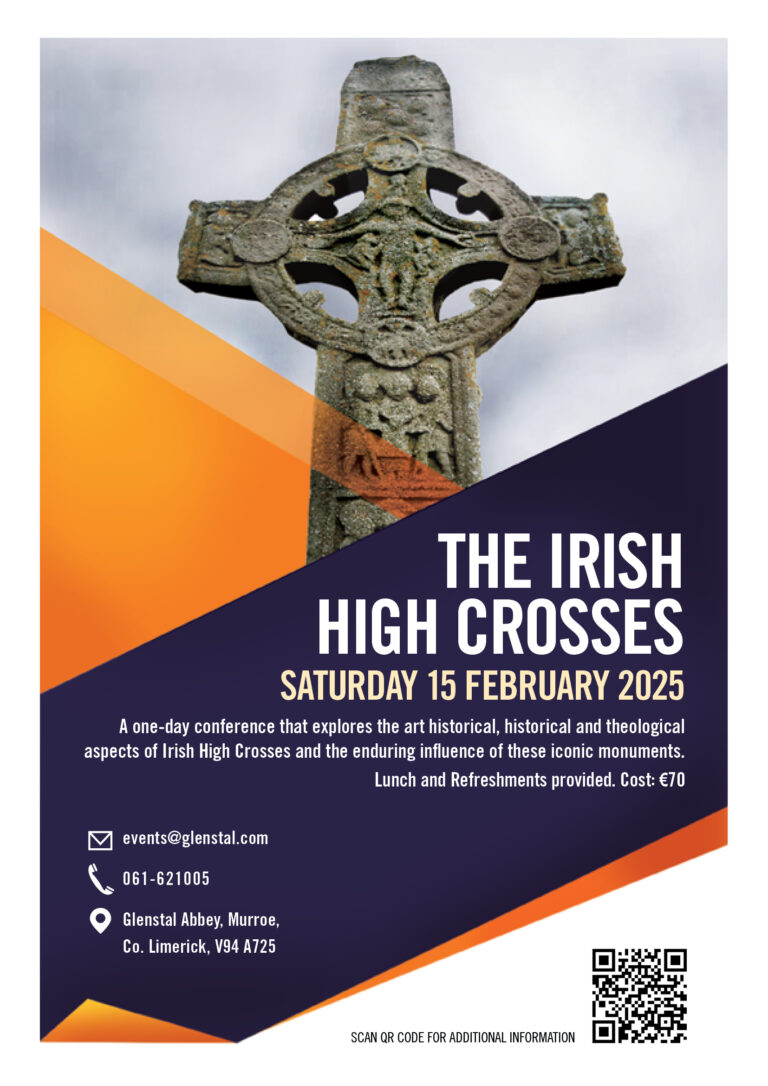
Irish High Crosses

As the central symbol of the Christian faith, the Cross has been depicted in a variety of ways by artists since the early Christian period. This one-day conference taking place on Saturday 15th February 2025 explores how Irish sculptors and artists have portrayed the key instruments of Christ’s passion in the millennium between the seventh and the seventeenth centuries. The contributors will examine the art historical, historical and theological aspects of the Irish High Crosses and will trace the enduring influence of these iconic monuments.

  • Registration: 9.30 to 10am
  • Session 1: 10am –10.45pm
    Form, Contexts and Functions of the Irish High Crosses with Dr Megan Henvey.
  • Session 2: 11.10–12 noon
    The Iconography of Irish High Crosses with Professsor Rachel Moss.
  • 12.10pm Conventual Mass followed by lunch.
  • Session 3: 2.20–3.10pm
    The Cross in Late Medieval Ireland with Br Colmán Ó Clabaigh OSB.
  • Session 4: 3.45–4.30pm
    The Afterlives of Medieval Crosses with Professor Rachel Moss.
More details on the talks and speakers can be found below. For bookings please contact 061 621005 or events@glenstal.com

The iconic form of Ireland’s early medieval, free-standing, stone-carved crosses has long captured the imagination of antiquarians, scholars, and the general public, alike. Through a case-study of what has been considered the earliest high cross – the Carndonagh Cross (Co. Donegal) – this paper will: provide an overview of research methods applied to the crosses to-date; consider some new evidence to better understand the chronology and morphology of the development of this unique monument type; and show how individualised study of these monuments may reveal both their original function, and their important role in the development of Christian belief and theology of the period.

This paper will present an introduction to the often complex iconography of the Irish High Cross. It will examine some of the more popular biblical themes, viewed in the broader context of early Christian art, before turning to some of the more puzzling  figures that present greater challenges in interpretation. 

Irish society and the Irish church experienced radical transformation from the twelfth century onwards. This presentation traces how these developments were reflected in the form and function of the crosses erected during the period from the twelfth to the fifteenth centuries. It will demonstrate how the form and iconography of these crosses reflected contemporary theological and political developments alongside changing expressions of faith and devotion.

The 150 years that followed the Reformation was a turbulent period in Irish religious history. This paper examines the fortunes of medieval crosses in Ireland during the period c. 1540-1690. It looks at how a confessionally divided society regarded the monumental cross on the one hand as an enduring symbol of commerce and civic obedience and on the other as a tangible link to the saints and centuries of Roman Catholic devotion. Examples of crosses that were destroyed, moved or reconstructed during this period will demonstrate the ever changing fortunes of some of Ireland’s best known stone crosses.

Megan Henvey is an Associate Fellow in the Department of History of Art at the University of York, where she also completed her AHRC-funded and Stanford Text Technologies- supported doctorate in 2021. Her multi-disciplinary research employs the historical, literary, liturgical, archaeological, art historical, and geological evidence to explore early medieval Christian communities in Ireland, their pan-geographic networks, and the relationships between regional iconographies and Christian beliefs in the early Middle Ages, with wider research interests including the nature of borders and their function and value in the classification of material heritage.

Rachel Moss is Professor in the History of Art and Architecture at Trinity College Dublin. She specialises in the medieval art and architecture of Ireland. Her current research focusses on the extended biography of medieval objects and buildings, examining how the uses and meanings of medieval material culture has altered over time.

Colmán Ó Clabaigh is a monk of Glenstal and a medievalist specialising in the monastic and religious history of Late Medieval Ireland on which he has published extensively. His current research focusses on the social impact of religion in Ireland between the twelfth and the sixteenth centuries.

Categories
Abbey | Latest News abbeynews

Every moment of the Christian life is an opportunity for renewal

I’m not a fan of New Year’s resolutions, mostly because I don’t keep them for long. Whether I keep them or not, however, the arrival of 2025 is like turning the page into a new chapter, offering a chance for reflection and closure on the past year and providing a clean slate for the year to come.

Looking back at the year gone by can bring a mixed bag of emotions. Gratitude for the blessings we’ve received, the successes we’ve enjoyed, or the new experiences we had. Regret for the missed opportunities, the broken relationships, or the things we’ve failed to do. And sorrow and grief for those we’ve lost along the way.

The dawning of the New Year gives us renewed hope for ourselves, our families, our countries and our world. There’s a feeling of excitement at the possibilities we might grasp, thanks for the fresh start we’re afforded, and not a little bit of trepidation at what might be ahead. It’s as if we have a blank page on which to continue writing the story of our lives, without the baggage of whatever the last chapter contained.

All this is rather secular, to be honest, as we Christians needn’t wait for the New Year to turn things around. Instead, it’s a possibility given to us every moment of our lives. Indeed, I’ve found that here in the Middle East the new calendar year tends to arrive with little fanfare. Rather, more attention is given to the Jewish Rosh Hashana and Islamic al-Hijrīyah, the religious “head of the year” that determines the timing of key festivals and which will impact upon, and be used alongside, the secular calendar. For example, on a recent visit to a Gulf country I noticed my passport was stamped with an arrival date of 15/06/1446… something sure to baffle border officials wherever the Gregorian calendar is used!

The quiet acknowledgment given to the arrival of the New Year in the Middle East contrasts with the lively traditions of my childhood in Northern England, where the start of the year was an occasion steeped in ritual and anticipation. As children we hoped to be the one chosen to step the “first foot” into the house, carrying with us a piece of coal and a silver coin in hope of prosperity for the year to come. I’m not sure what the significance or origin of these rather superstitious practices are, but the coal probably had something to do with the region’s mining heritage and spoke of a time when coal in the hearth was vital for a family’s survival. In those days, hope for prosperity was born of knowledge that destitution was always a terrifying possibility.

When thinking about these practices, I’m reminded of a line somewhere about how we need rituals because “we need to elevate certain parts of life by marking them out in some way.”  For us Christians, it is the Church that recognises, explains and dignifies this human impulse through her own rituals, liturgies and observances. In a less religious upbringing like my own, perhaps the sort of New Year rituals that I described took on more importance as they fulfilled the need to mark turning-points in lives otherwise devoid of Church practice and rituals.

Indeed, as participation in Church life declines nowadays a whole array of secularized rituals now seek to satisfy this human desire, often with hefty price tags attached: gender reveals, naming ceremonies, and even divorce rituals, to name but a few!

I don’t want to sound puritanical, and I do recognise how the New Year gives a very clear sense of transition and many people wish to mark it. So, if we wanted to make resolutions for the New Year we won’t go wrong by committing to something like more time for daily prayer, the reading of the Scriptures, going to Mass more often, or frequenting the Sacrament of Reconciliation. Friends of our monastery might consider taking time for a retreat at Glenstal Abbey, a commitment to regular giving, or living the Benedictine spirituality each day as one of our Oblates.

I’m not sure what, if any, resolutions I’ll be making. But I will mark the arrival of the New Year 2025, and will use it as an opportunity to review the year past and seek signs of God’s action throughout. I’ll take time to reflect on the year ahead too, mindful that every moment of the Christian life is an opportunity for renewal – not just at the start of the year. Thanks be to God!

Justin Robinson OSB

Categories
Abbey | Latest News abbeynews

Christmas Liturgy Times/Opening Hours

We pleased to share with you details of the liturgical celebrations for Christmas, and wish to draw your attention to changes to the timetable throughout the period:


  • Tuesday 24th December (Christmas Eve)

6.00 pm – Vespers I

11.20 pm – Vigil followed by Midnight Mass


  • Wednesday 25th December (Christmas Day)

8.00 am – Lauds

10.00 am – Morning Mass (no music)

12.00 noon – Solemn Conventual Mass

5.00 pm – Vespers II


  • Thursday 26th December (Feast of St Stephen)

7.00 am – Matins & Lauds

12.10 pm – Mass

6.00 pm – Vespers


  • Friday 27th December (Feast of St John the Apostle)

7.00 am – Matins & Lauds

12.10 pm – Mass

6.00 pm – Vespers

8.35 pm – Compline


  • Saturday 28th December (Feast of the Holy Innocents)

7.00 am – Matins & Lauds

12.10 pm – Mass

6.00 pm – Vespers I

8.35pm – Office of the Resurrection


  • Sunday 29th December (Feast of the Holy Family)

7.00 am – Lauds

10.00 am – Mass

12.35pm – Sext

6.00 pm – Vespers II

8.35 pm – Compline


  • Monday 30th December (Sixth Day in the Christmas Octave)

7.00 am – Matins & Lauds

12.10 pm – Mass

6.00 pm – Vespers

8.35 pm – Compline


  • Tuesday 31st December (Seventh Day in the Christmas Octave)

7.00 am – Matins & Lauds

12.10 pm – Mass

6.00 pm – Vespers I

8.10 pm – Vigil


  • Wednesday 1st January (Solemnity of Mary, Mother of God)

7.00 am – Lauds

12.10 pm – Mass

6.00 pm – Vespers II

8.35 pm – Compline


NORMAL LITURGICAL TIMETABLE RESUMES ON THURSDAY 2ND JANUARY


  • Confessions

A priest will be available on Christmas Eve from 2pm – 5pm in the Abbey Church.


  • Guesthouse

Closes on Sunday 22nd December and reopens on Monday 30th December.

Categories
Abbey | Latest News abbeynews

Advent Reflection

“And nothing exists except the Child”

Sometimes we might only remember a single word, sentence or scene of a movie. It’s not because the movie overall fails to inspire, but rather because a specific moment powerfully makes a lasting impression upon us.

One such scene for me comes from Of Gods and Men, the true story of a group of French Trappist monks murdered in Algeria during that country’s brutal civil war. The film was released in 2010 to critical acclaim, winning the Grand Prix at the Cannes Film Festival.

The movie begins with Algeria plunged into violence and the situation rapidly deteriorating, with the small monastic community at Tibhirine much valued by their Muslim neighbours. Militants have made a threatening visit to the monastery and the monks have begun to discuss whether they ought to leave the country or stay behind, come what may.

On Christmas Eve, the Trappists gather in the chapel and sing:

Voici la nuit,

L’heureuse nuit de Palestine,

Et rien n’existe hormis l’Enfant,

Hormis l’Enfant de vie divine :

En prenant chair de notre chair,

Dieu transformait tous nos déserts,

En Terre d’immortels printemps.

For me, it’s perhaps the most powerful moment of the entire film and the scene most etched into my memory. “This is the night, the happy night of Palestine” goes the chant. Maybe it’s because of my connections to the Holy Land, forged over more than a decade, that this moment strikes a chord. Palestine doesn’t see many happy nights, especially at the present time. This night is different, unlike others, because it’s a happy one in Palestine. How?

“And nothing exists except the Child, except the Child of divine life.” Afraid and uncertain about the future, the chant seems to break through the violence and chaos to speak to the monks in the holy night. Nothing else now exists: not the war raging outside, nor the terror which engulfs the small community, for the Child of divine life has come into the world on Christmas night and reconfigured everything. With their gazes fixed on the Christ Child, nothing more exists in this moment of prayer and song.

“By taking flesh of our flesh, God transformed all our deserts, into a land of immortal springs.” Suddenly, a new perspective has been opened. The situation has been transformed for the monks – as it has for all of us – as God enters into our broken world and takes on our fallen humanity to free it, raise it up and redeem it. A vulnerable Child lands into the chaos of the Algerian civil war – into war everywhere – to bring peace, turning deserts into springs and giving life in abundance. The darkness of the world is put to flight, as the “Child of divine life” comes to teach us divine life and give us a share in it.

It may all seem a little romantic, but this scene seems to have made a lasting impression on me. I’ve often returned to it, especially amidst the war and turmoil which besets our world – and the Middle East in particular – at this present time.

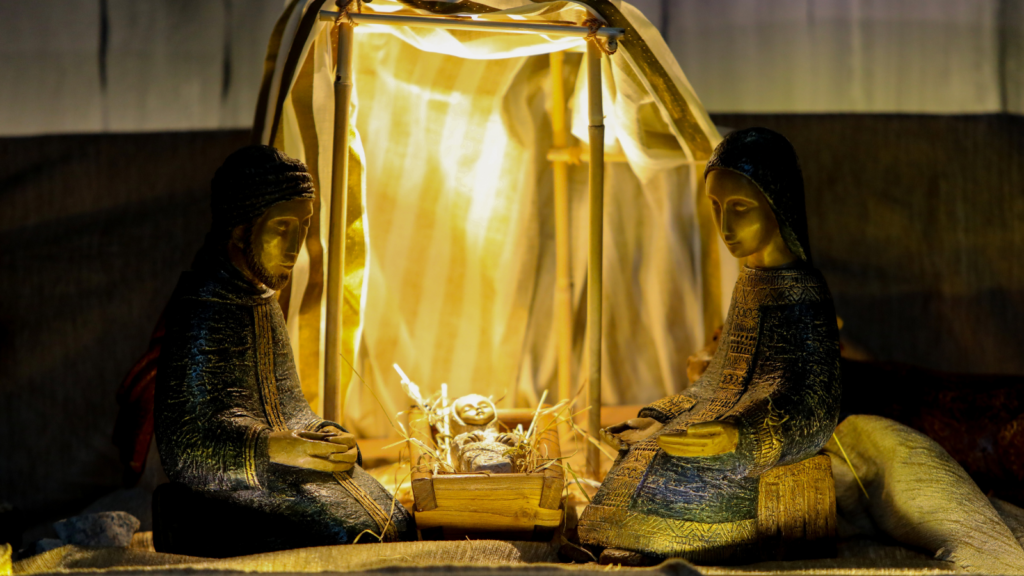
In this season of Advent, perhaps this scene can be a reminder that “nothing exists except the Child” who ought to be the focus of our attention despite the distractions all around. Everything else becomes secondary and is transformed when we put the Child at the centre of this time of year and our entire lives. It is the Child of Bethlehem, born on that happy night of Palestine, whose coming into the world changed everything and continues to do so.

This is Good News for our world: darkness is turned to light, death into life, despair into joy, affliction into hope. As Advent gets underway and leads us to Christmas in this precarious time for our world, what better gift could we hope for?

Justin Robinson OSB

Categories
Abbey | Latest News abbeynews

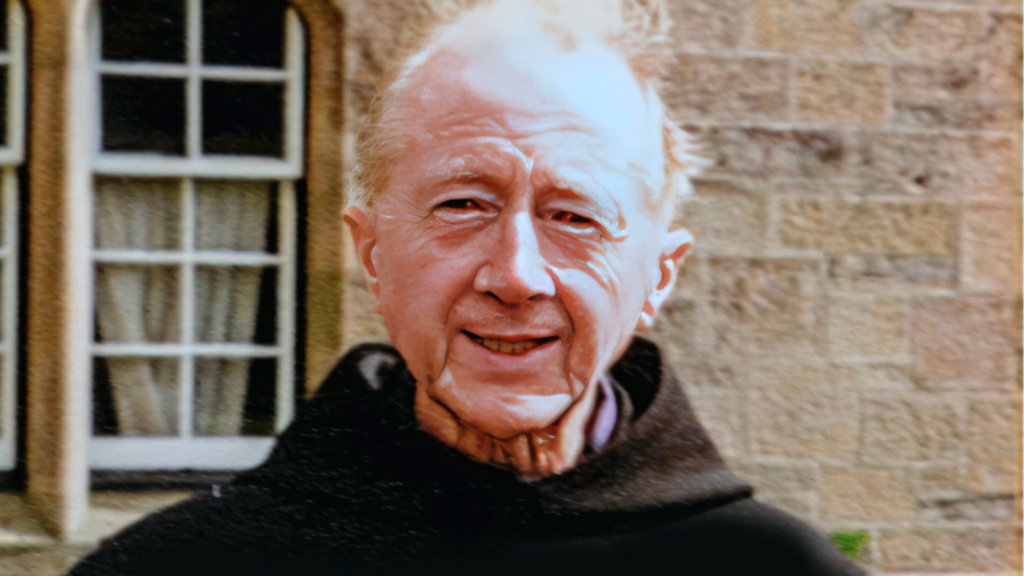
Remembering Abbot Augustine O’Sullivan

This month the monastic community marks the 25th anniversary of Abbot Augustine O’Sullivan, who died on 7th December 1999.

Seamus O’Sullivan was born in Limerick city on 21st October 1918. He trained and worked as a primary school teacher before entering Glenstal Priory in 1946, receiving the name Augustine. He was professed on 13th April 1947 and, following studies in the monastery and with the Spiritan Fathers at Kimmage Manor in Dublin, was ordained priest on 15th June 1952. For the next five years he was involved in many areas of the life of the monastery and school. During this period and later, when his workload permitted, he was a much sought-after retreat master and speaker, in particular for religious sisters.

When Glenstal became an abbey in 1957, Father Augustine was appointed Prior and Novice Master. For the next nine years, by his constant devotion and presence, Prior Augustine maintained the rhythm of monastic life while supporting the young Abbot Joseph Dowdall who was much involved in assuring the role of religious in the Irish Church, not least as the founding president of what was then known as the Conference of Major Religious Superiors.

Elected second Abbot of Glenstal Abbey at Christmas of 1966, following the premature death of Abbot Joseph, Abbot Augustine served the community for fourteen years until his retirement at the end of 1980. These were the years immediately following the Second Vatican Council. With his clear-headed and courageous defence of essential monastic values, Abbot Augustine guided the community calmly through this exciting and sometime turbulent period. He encouraged Glenstal’s contribution to the wider Church by supporting the Annual Ecumenical Conference, which had made a faltering, exploratory, start in 1964. He was an enthusiastic supporter of the older Liturgical Conference, but was sufficiently far-seeing to recognise in 1975 that this conference had, at least for the time being, served its purpose and that it was time to hand over to other fora.

Upon his retirement as abbot in 1980, when he might have sought a quieter life, Abbot Augustine went to the monastery at Ewu in Nigeria he had originated and constantly supported during his time as abbot. He remained at Ewu for the remaining nineteen years of his life, acting as superior for fourteen of these years. On his last visit to Glenstal, scarcely two months before he died, Abbot Augustine did not hide his impatience to return to Ewu, stating that he wanted to be buried there.

Appropriately, his last days were spent in the care of the Medical Missionaries of Mary, with whom he had had close associations in Ireland and Nigeria for many years. He died in Ibadan on 7th December 1999 and, as he had wished, was buried in Ewu. People from all over Nigeria came to his funeral, witnessing to the peace he had brought into the lives of so many.

May he rest in peace.

Categories
Abbey | Latest News abbeynews

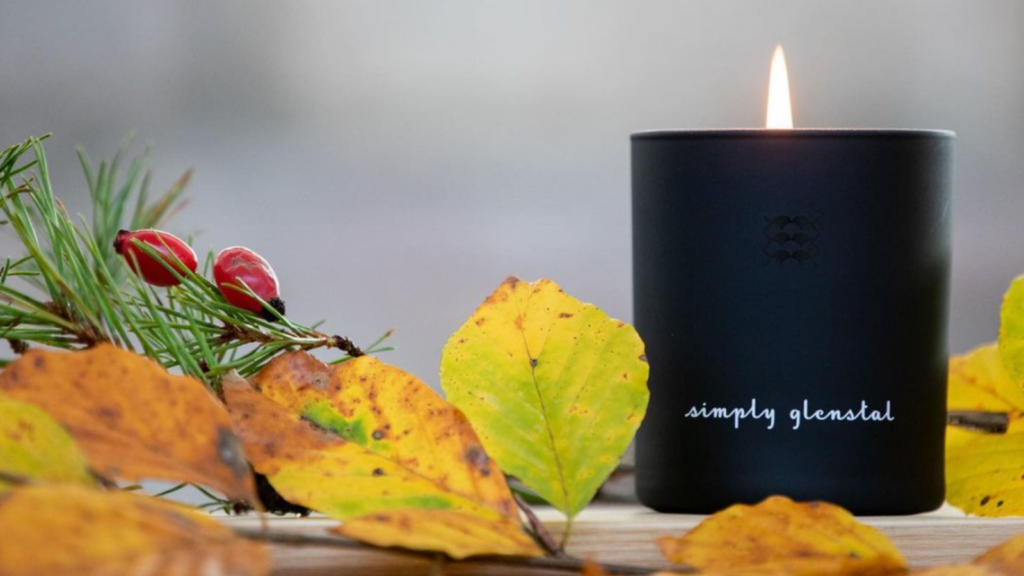
Scented Candles

Back by popular demand, Glenstal Abbey’s scented candles are now in-stock in our online shop: shorturl.at/jPJqY

Inspired by the botanicals of our walled garden, Father Cuthbert created these fragrant candles with La Bougie in Co. Cork.

Strike a match and lift your mood! 🕯️

Categories
Abbey | Latest News abbeynews

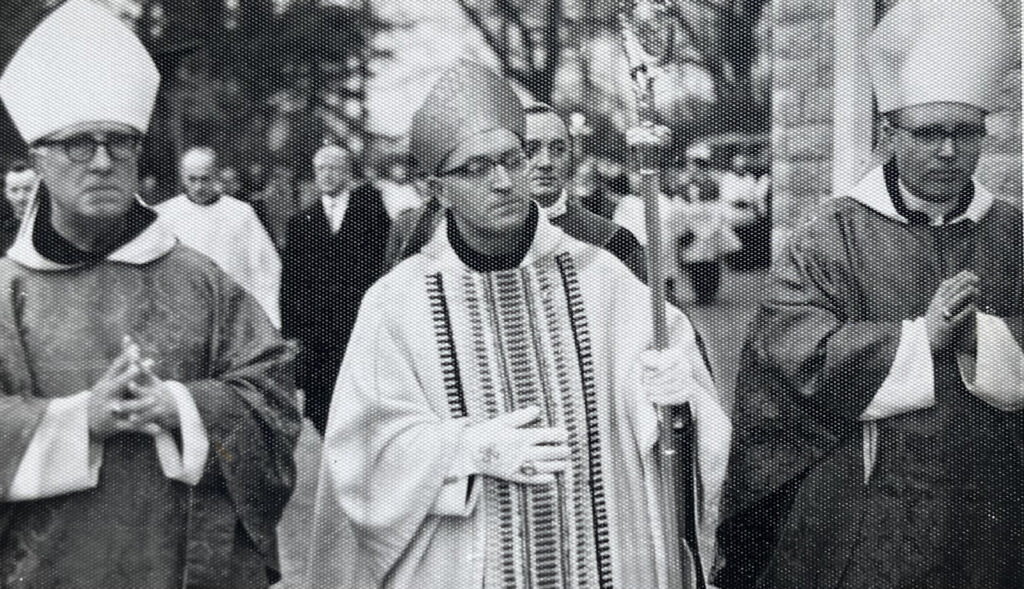
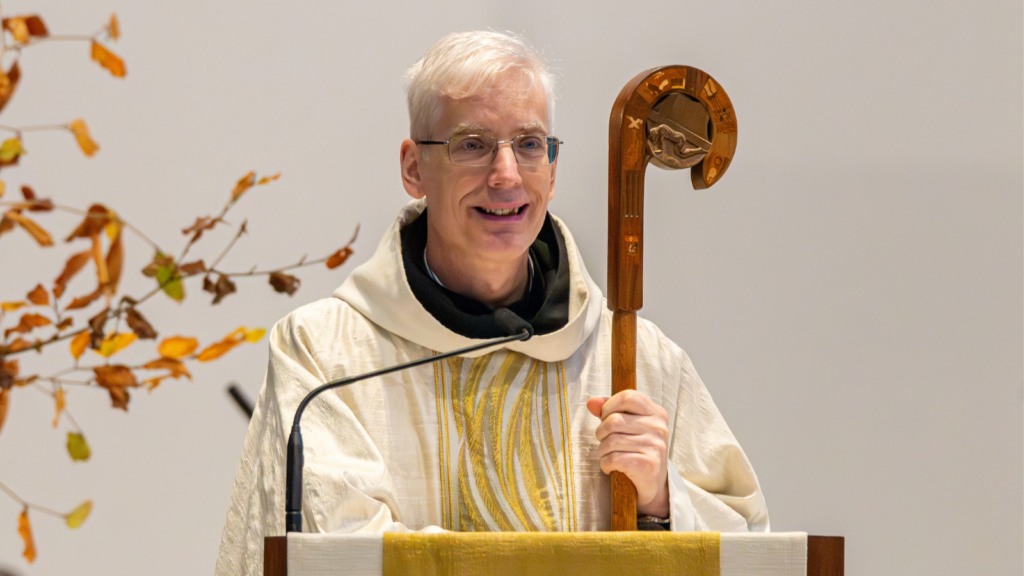
Abbot Columba Receives Abbatial Blessing

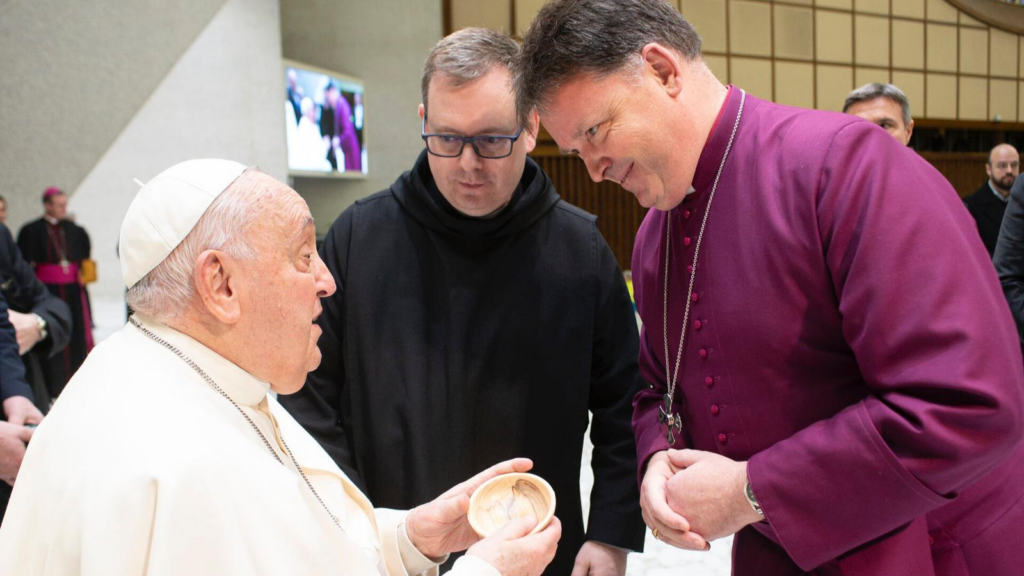
The recently-elected abbot of Glenstal Abbey received his abbatial blessing at a ceremony presided over by Kieran O’Reilly, Archbishop of Cashel and Emly, on Friday 1st November.

Born and raised in Dublin, Abbot Columba McCann OSB served as a priest of the Dublin Archdiocese before entering the monastery more than two decades ago.

The seventh abbot of Glenstal Abbey was elected by the community of twenty eight Benedictine monks earlier this year. The monastery was founded nearly a century ago and serves as a place of prayer, work, education and hospitality.

Held on the Solemnity of All Saints, the liturgy called for God’s blessing, strength and guidance upon the new abbot as he begins his role as father, teacher, and model for the monastic community.

Speaking as his eight year term of office gets underway, Abbot Columba commented: “the worst days of the pandemic brought home to us just how interconnected we are on our planet, even at a spiritual level. Part of our task as monks today is to keep rediscovering what it is we bring to the Church and the world, and what God wishes to bring to others through us.”

The ceremony was attended by a congregation of more than two hundred guests, with the Mass concelebrated by Brendan Leahy, Bishop of Limerick, in the presence of ecumenical representatives including the Church of Ireland’s Bishop of Tuam, Limerick and Killaloe Michael Burrows, Dean of Limerick and Ardfert Niall Sloane and the Methodist Church’s Gillian Kingston.

Categories
Abbey | Latest News abbeynews

Homily – Sunday 30 – Year B

Fr Anthony Keane OSB

As Jesus and his disciples left the City of Jericho to go up the
dangerous road to Jerusalem, Bar Timaeus, a blind beggar
sitting on the side of the road, hearing that it was Jesus of
Nazareth that was passing, began to shout and cry out:
Son of David, Jesus, have pity on me.

And many of them scolded him and told him to keep quiet,
But he shouted all the louder: Son of David, have pity on
me… Jesus stopped… Courage they said, get up, He is
calling you…then Jesus said: What do you want me to do for
you? The Blind Man said to Him ‘Rabbuni, let me see
again’. Jesus said to him Go, your faith has saved you.

And at once his sight returned…Now we too, might do well to
ask Jesus, our wisdom and light, that we might see again, for
divine wisdom is indeed more splendid than the sun;
compared with light she takes first place, for light must yield
to night, but against Wisdom, evil cannot prevail.

But who are the jealous spirits that try to prevent us?
It is the enemy, the accuser of our race, which we may, by
God’s grace contemn and ignore, for we read ‘In the
beginning was the Word’.

And who are those who say ‘Courage, get up, He is calling
you’? This is the great gathering of Angels and Saints, whose
feast we celebrate next Friday the First of November. It is the
voice of all those who from our infancy, have looked on us
with love and wished us well. May we listen to their kindly
and beautiful voices.

Categories
Abbey | Latest News abbeynews

Homily – Sunday 29 – Year B

Fr Patrick Hederman OSB

A farmer was saving his hay in the traditional style. None of your combined harvesters for him. He cut the field with a scythe and then began turning the grass with a fork to dry it in the sun. After lunch he turned the whole field again, and at five O’Clock the rain poured down from heaven and ruined his whole day’s work. He looked up into the sky and roared at the top of his voice: ‘Jesus Christ, crucifixion wasn’t good enough for you!’

Now, if you think of it, that man’s theology was quite advanced. He covered most of the items in the creed that we’ll be singing together as Christians in a few minutes time: he believed in God the father Almighty, creator of heaven and earth. He believed in Jesus Christ his only son, Our Lord, who suffered under Pontius Pilate was crucified died and was buried; he believed in the resurrection: that the same Jesus is now seated at the right hand of the Father, in charge of the weather as well as everything else.

The only thing is: he got it all wrong. The trinity, who are trying to lead the universe in the right direction, and who are dependent on each one of us as cooperating partners, have massively big plans for each one of us as for the whole universe, have more to do than make hay while the sun shines.

Take another example nearer to home. On Wednesday 18 th of September last, the Glenstal JCT were playing Crescent in the first round of the Junior Cup. In the dying minutes of the game Glenstal were leading by one point. Crescent were given a free under our posts. Prayers went up from both sides. The kicker missed the kick and Glenstal won the match. Do you think God was responsible for that historic win? And, if so, what were the Crescent team meant to think.

It is consoling, at least to me it is, to hear in today’s Gospel that the very first disciples of Jesus, the Sons of Thunder, James and John, Scrum half and Out-half, you might say, on the first JCT [Jesus Christ Team] were getting it all wrong from the very beginning: ‘When you win the election. Lord, and take charge of your kingdom, can I be the Taoiseach and the brother here has his eye on being Tanaiste?

They didn’t know what they were talking about; they didn’t understand that Jesus Christ came on earth to teach us a whole new notion of politics, a whole new way of doing things, a whole new way of being in charge. And have we learned any better since then?

Listen to the Persian poet, Rumi, who lived in in the 13 th Century in the country we now know of as Iran. He seems to have got the message a bit better and understood his place and his role in the universe:
Then new events said to me,
‘Don’t move.
A sublime generosity is
coming towards you.’
And love said, ‘Stay with me.’
And I said, ‘I will.’
The chess master says nothing,
other than moving the silent chess piece.
That I am part of the ploys
of this great game makes me
amazingly happy.

Categories
Abbey | Latest News abbeynews

Homily – Sunday 28 – Year B

Fr Henry O’Shea OSB

Many people who had the patience to follow the reporting and
comments on the government’s recent budget, will most likely have
been struck by the undercurrent of what can be called the What’s-in-
it-for-me-syndrome. An understandable syndrome, of course. We
have to live. But how? But why?

In today’s gospel reading, Peter shows a certain air of potential
disillusionment when he begins to point out to Jesus that he and the
other disciples have given up everything to follow him: – in some
cases, a successful fishing business, in most cases, a settled family life, a
certain stability, however humdrum And so on. Peter’s reminder cannot hide an expectation of some reward for his and the disciples’ heroic offering. Jesus interrupts him and reassures him that he and they will be amply rewarded – but at a cost.

Regardless of what form this reward will take, it will nearly always
include persecution in its varied forms. This can be persecution
experienced as actual physical violence, as legalized discrimination, as
public or private ridicule, as being ‘othered’. Persecution, even if not
recognized as such, can also take the form of racking doubts, mental
weariness, of temptations to give up.

Among the experiences that can prompt us to leave all, are
disillusionment when our idols let us down, the evaporation of hope
when our idols are shattered. In our relatively affluent society, most of us have the luxury of being able to choose our idols. But, idols remain idols, whether material, psychological, spiritual or some combination of these. And idols cannot save. Idols always disappoint. What has this to do with our gospel? Am I my own idol? What are my idols? How do I recognize them for what they are? How do I name them? Today’s first reading is from the Book of Wisdom and is a poem or song attributed to King Solomon, who reigned in what is now Israel, about 1000 years before the time of Christ. Solomon, having experienced what, by any standards, was enormous worldly success – but also well aware of his own personal flaws – tries to draw up a balance, tries to express where he stands, what he really values. He identifies wisdom as the greatest gift and treasure one could desire.

The fact that he has a full stomach and more, does not invalidate his
insight. Roughly 1000 years later, the write of the Letter to the Hebrews, from which our second reading today is taken, suggests one way of identifying our idols. The writer tells us that the word of God is living and actively effective, sharper than a two-edged sword, that can reach into what we regard as the most secret corners of our innermost being, the radical core of our hearts, the being of the real me.

This word of God is the scalpel that dissects, the spotlight that
exposes, the x-ray that penetrates, all our illusions and phantasies, all
our delusions, all our idols. This word of God exposes our idolatries,
not only of worldly riches as we usually understand them, but also the
idolatries of our smug or imagined securities, our imagined swaggering superiorities, be they intellectual, athletic, social – or even spiritual.
It is clear that the man in today’s Gospel who approaches Jesus is not
an evil person. He keeps all the commandments. He is honest, law-
abiding and respectable, probably respected. We are told that Jesus looked at him and loved him. Jesus does not condemn him, nor does he condemn us, but indicates an attachment that is crippling him and can cripple us; his and our many possessions. Jesus offers him and us an alternative that he is, and we are, free to choose. Jesus tells him to
let go, sell up, give to the poor and risk a life of listening to Jesus’ own
living and effective word.

Jesus invites us also to grow up, to get really real, to let the scalpel, the
searchlight, the x-ray of his word, of himself, the word of God made
flesh. He invites to let this really get into our hearts. Jesus admits to his shocked disciples that this relativisation, this scrapping of accepted social norms, even proprieties, might, and even does, appear impossible to the human person. The eye of a needle will always remain small. But it is not impossible to God. It is not impossible if we let him in to the real heart of ourselves. If we let him in, so that, in the words of today’s responsorial psalm: ‘…we may shout for joy and gladness all our days…’

Subscribe To Our Newsletter To Receive Updates

[hubspot type=form portal=6886884 id=9e1d6d0d-c51e-4e35-929d-3a916798de64]